
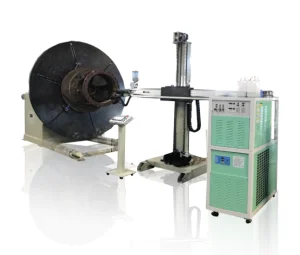
 High-Quality DH3-HV1700-B06 manipulator positioner Supplier
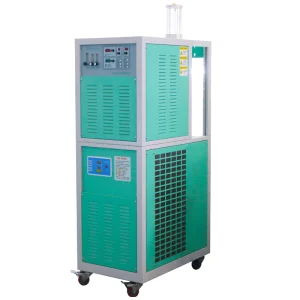 China High Integration Plasma Powder Welding Machine (DML-V03BD)
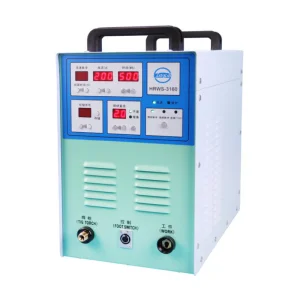 High-Quality HRWS Precision Repair Welding Machine
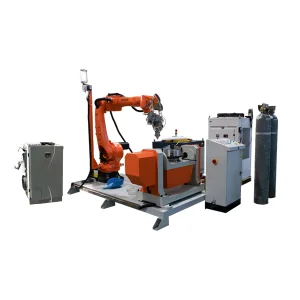 Custom Automated Laser Cladding Machine Manufacturer
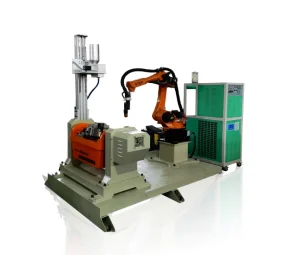 China DH1440-B06 Automatic Plasma Surfacing Robot
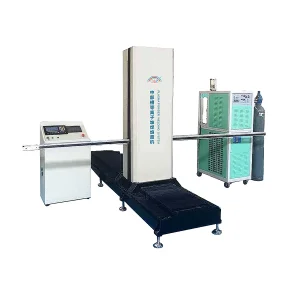 China DZB-NC401 Automatic Plasma Cladding System
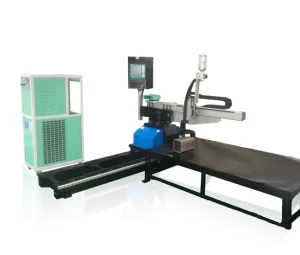 DXB-NC301 Cantilever Plasma Surfacing System
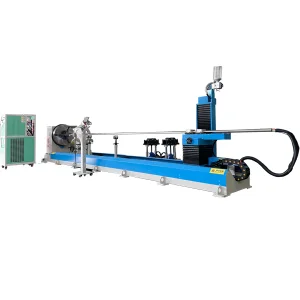 DSL-LC401 Double Cone Cladding Machine
In the modern manufacturing landscape, selecting the right joining and surfacing technology is critical for product longevity and performance. The core "違い" (difference) between laser welding (レーザー溶接) and traditional arc welding (アーク溶接) lies in energy density, heat input, and metallurgical outcomes. Laser welding utilizes a coherent, highly focused light beam to achieve deep penetration with a minimal Heat Affected Zone (HAZ), whereas arc welding relies on an electrical discharge between an electrode and the workpiece, creating a broader thermal profile.
For industrial "Manufacturers & Suppliers," the choice is often dictated by the "Dilution Rate." As noted in our technical research, Plasma Transferred Arc (PTA) hardfacing and Laser Cladding are superior for surface enhancement because they allow for precise alloy deposition. Laser systems provide a dilution rate of less than 5%, preserving the purity of the coating, while traditional arc processes may result in 20-30% dilution, potentially compromising the wear-resistant properties of the surface.
| Feature | Laser Welding (レーザー溶接) | Arc/PTA Welding (アーク溶接/PTA) | Industrial Impact |
|---|---|---|---|
| Energy Source | High-density Photon Beam | Electric Arc / Ionized Gas | Laser offers higher precision |
| Heat Input | Extremely Low & Focused | Moderate to High | Laser prevents part distortion |
| Welding Speed | Very High (up to 5-10m/min) | Low to Moderate | Laser increases throughput |
| Gap Tolerance | Strict (Requires high precision) | Flexible (Better for large gaps) | Arc is more forgiving on fit-up |
| Metallurgical Bond | Fine grain structure, low dilution | Strong bond, higher dilution | Laser is better for thin overlays |


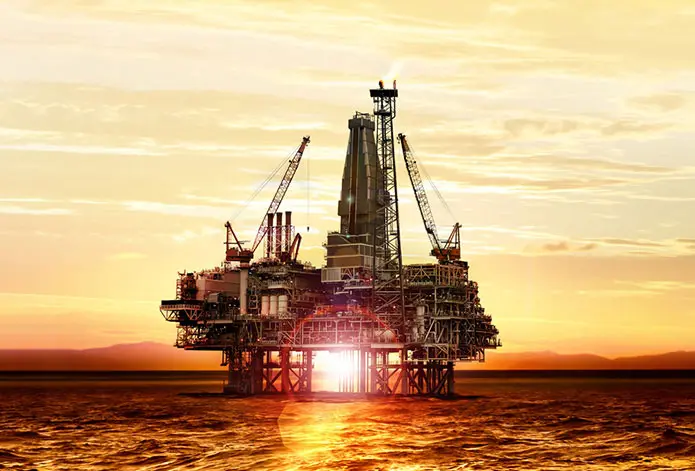
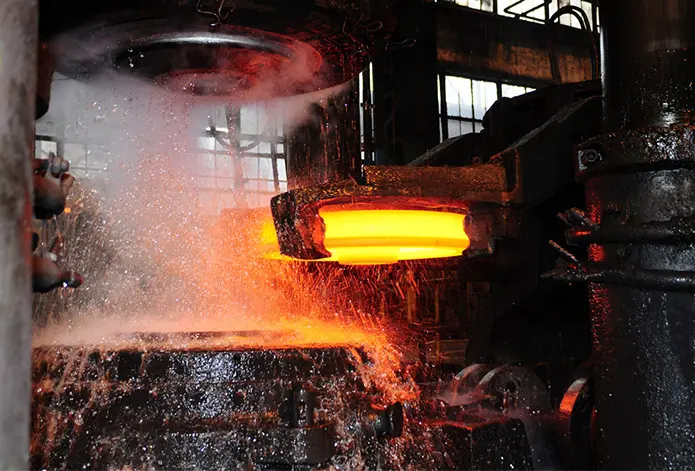
Shanghai Duomu provides end-to-end solutions from R&D to final assembly, ensuring stable performance and high integration of plasma and laser systems.
Our equipment meets international safety and quality standards, making it the preferred choice for global enterprises in nuclear power and aerospace.
With 24-hour touchpoints and specialized engineering teams, we support large-scale remanufacturing projects across Europe, SE Asia, and the Americas.
The welding industry is shifting towards Intelligent Automation. We are integrating AI-driven monitoring systems into our laser cladding robots to detect real-time melt pool variations. Furthermore, the push for "Green Manufacturing" has made Laser Cladding more popular due to its high material efficiency and lack of toxic consumables. As a leading manufacturer, Shanghai Duomu is at the forefront of this transition, developing hybrid systems that combine the speed of Arc with the precision of Laser.
Laser systems have higher initial CAPEX but lower OPEX due to speed and minimal post-processing. Arc systems (PTA) are more affordable for heavy cladding applications.
Yes, laser cladding is the industry standard for hydraulic rods, offering superior corrosion resistance compared to chrome plating.
Standard machines are ready for operation within days, while customized robotic lines may take 4-8 weeks for calibration and training.
We offer 24-hour remote technical support and can dispatch engineers for large-scale industrial setups globally.
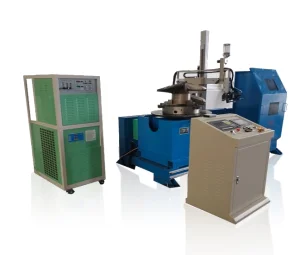 Custom DH6-LC501-B06 Automatic Cladding System
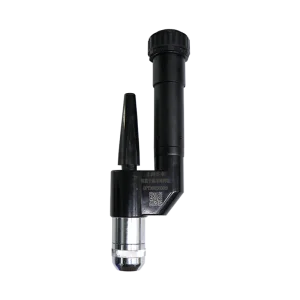 High-Quality Plasma Surfacing Torch 300
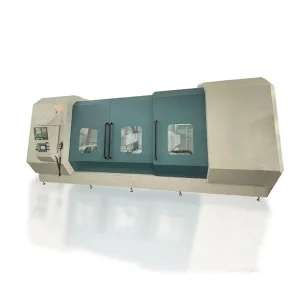 Custom Laser Cladding Equipment for Hydraulic Rod
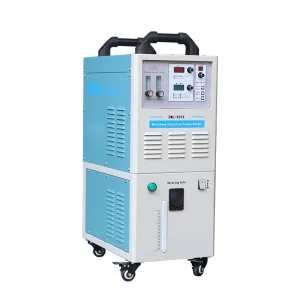 Precision Micro Plasma Arc Welding Machine
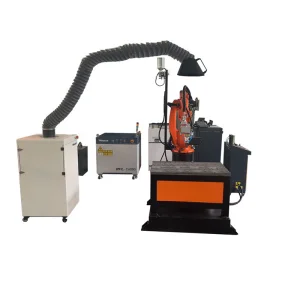 China Robotic Laser Cladding System for Blades
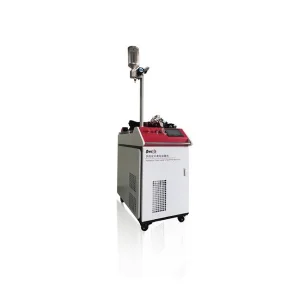 China Portable Laser Cladding Welding Machine
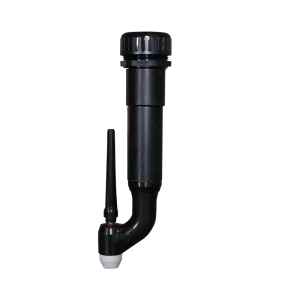 China Plasma Torch 100A Manufacturers, Factory
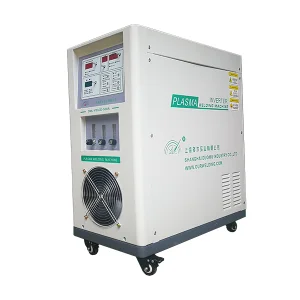 High-Quality Plasma Powder Surfacing Machine DML-V03CD
Unit 2, No.615 Feng Deng Road, Jiading District, Shanghai, China
Email: [email protected]
Phone: +86 15021996700
Our independent R&D team develops, produces, and sells high-performance plasma and laser cladding equipment for large-scale remanufacturing projects.
For inquiries about our products or pricelist, please leave your details and we will be in touch within 24 hours.