Home >
Laser Cladding >
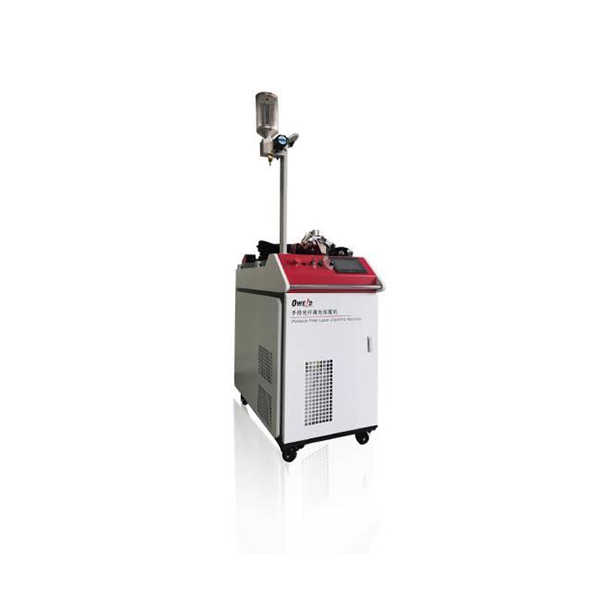
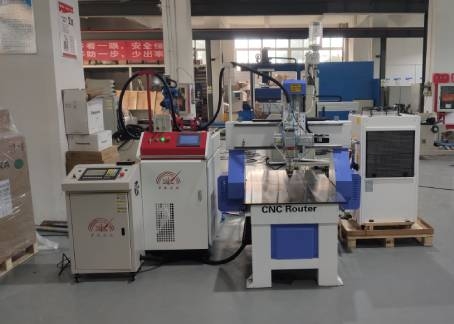
China Portable laser cladding welding machine Manufacturer, Manufacturers
1 / 1
China Portable laser cladding welding machine Manufacturer, Manufacturers
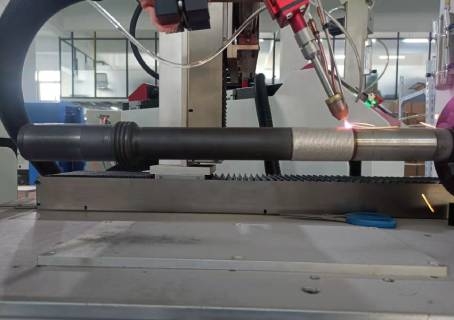
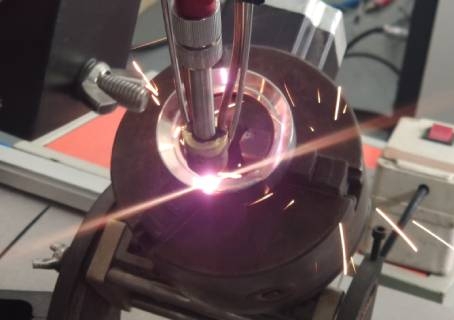
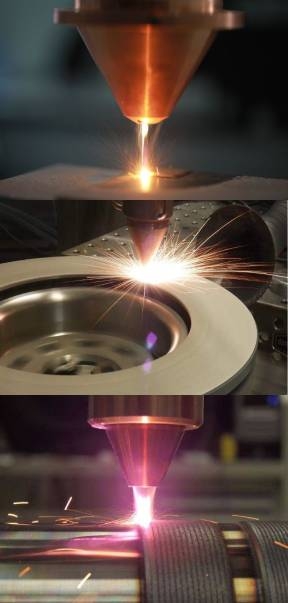
Laser cladding is the technology of high-eneregy laser beam (104-106w/cm2) radiation on the metal surface meanwhile additive alloy powder to form a new layer of low dilution rate to make up the shortage of the base material, of which the process of melting, spreading and solidifying swiftly to cladding a layer of material with a special features on the base. It would be cladding the metal and nonmetals as the needs, such as the heat resistance, wear resistance, corrosion resistance, oxidation resistance, fatigue resistance or optical, electrical and magnetic properties. It is the technology of high efficiency that it would make the eminent properties layer on the base of affordable material. That would save the cost.
Swift Cooling: Cooling swiftly up to 106 ℃/s, solidifying swiftly to obtain fine grains microstructure or cenotype that cannot form during balanced production.
Precise Control: Possible to control focus distance and penetration to adjust dilution rate, ensuring strong metallurgical bonding between welding material and base.
Low Heat Impact: Tiny deformation with only surface melting during cladding (0.1-0.5mm), minimizing structural impact.
High Density: The cladding layer features high density (18-60HRC) without shortages such as holes, slag, or cracks.
Material Versatility: Minimal limitations in powder selection, allowing high melting point materials to be clad onto low melting point substrates.
Remote & On-site Repair: Proper for remote transmission and repairing large components directly on-site.
Deep Access: Non-contact laser cladding enables processing in difficult areas like grooves and deep holes.
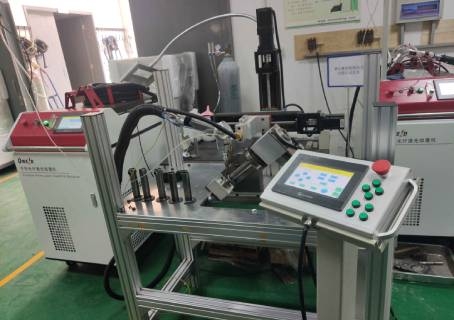
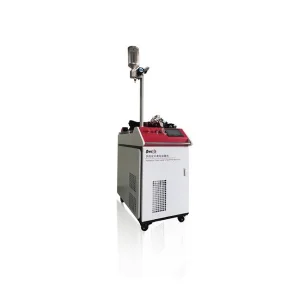
Hand-held Flexibility: Hand-held systems work efficiently for complex shapes without the need for complex programming.
Frequently Asked Questions
What is the cooling rate of this laser cladding process?
The process features extremely swift cooling rates of up to 106 ℃/s, allowing for fine grain microstructures.
How strong is the bond between the cladding and the base material?
The system creates a metallurgical bonding between the welding material and the base, ensuring high structural integrity.
Does laser cladding cause significant thermal deformation?
No, it has low heat impact with tiny deformation, as only the surface (0.1-0.5mm) is melted during the process.
What is the hardness level of the resulting cladding layer?
The cladding layer is high density and typically achieves a hardness range of 18-60HRC.
Can it be used to repair large parts in remote locations?
Yes, the system is designed for remote transmission and is ideal for on-the-spot repairs of large components.
Is it possible to process complex shapes or deep holes?
Absolutely. Since laser cladding is non-contact, it can reach into grooves and deep holes, while the hand-held system handles complex shapes easily.