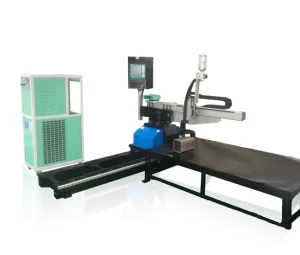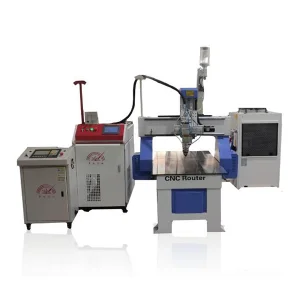
In the evolving landscape of Precision Surface Engineering, Laser Hardening (レーザー焼入れ) has emerged as a disruptive technology. Unlike traditional flame or induction hardening, laser quenching utilizes a high-energy density laser beam as a heat source to rapidly heat the surface of a metal part above its phase transition point. The self-cooling effect of the substrate then causes a rapid martensitic transformation, resulting in a hardened surface layer.
However, for global procurement directors and metallurgical engineers, understanding the "欠点" (Disadvantages/Shortcomings) is as critical as recognizing the benefits. This white paper serves as a comprehensive guide to navigating the technical bottlenecks of laser hardening, offering Information Gain through real-world manufacturing data and Shanghai Duomu's decade-long expertise.
One of the primary レーザー焼入れ 欠点 is the limited hardening depth. While induction hardening can reach depths of 5-10mm, laser hardening typically plateaus at 0.5mm to 1.5mm. For heavy-duty industrial components subject to extreme abrasive wear, this shallow layer may be insufficient.
The "Line of Sight" requirement means that complex internal bores or deeply recessed features are difficult to treat. Without advanced 5-axis robotic manipulation—a core specialty of Shanghai Duomu—uniform hardening of irregular geometries remains a significant challenge.
The high cost of high-power fiber laser sources and precision robotic systems can be a barrier for small-scale manufacturers. While ROI is high due to efficiency, the upfront investment is significantly higher than flame hardening setups.
Certain materials, such as copper or highly polished aluminum, reflect laser energy, reducing efficiency. To mitigate this, specialized absorbent coatings are required, adding a step to the production cycle.
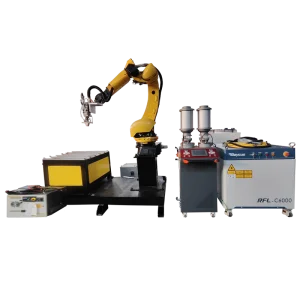
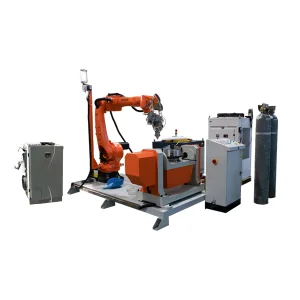
At Shanghai Duomu, we don't just sell machines; we provide solutions to the industry's most pressing レーザー焼入れ 欠点. Our R&D team has pioneered the integration of AI-controlled thermal feedback loops that adjust laser power in real-time based on the material's emissivity. This ensures a consistent hardening depth even on variable surfaces.
Utilizing KUKA or ABB robotic arms to solve the "Line of Sight" issue for complex aerospace parts.
Combining PTA (Plasma Transferred Arc) cladding with laser hardening to provide both depth and precision.
Our systems reduce post-processing grinding time by up to 70% compared to induction hardening.
The global market for laser surface treatment is projected to grow at a CAGR of 8.4% through 2030. Key drivers include the Automotive, Aerospace, and Renewable Energy sectors. In this competitive arena, China-based manufacturers like Shanghai Duomu offer a distinct "Efficiency Advantage":

Hardening of plowshares and cutting blades to survive highly abrasive soil conditions.

Precise hardening of turbine blade roots and landing gear components with zero distortion.

Treating drill bits and valve seats for extreme pressure environments.
Modern procurement teams are no longer just looking for "suppliers"; they are looking for "strategic growth partners." The current trend is moving towards Green Manufacturing. Laser hardening is significantly more energy-efficient than furnace hardening and requires no quenching media (oil/water), making it the preferred choice for ESG-compliant enterprises.
Pro Tip for Procurement: When evaluating a supplier for laser hardening equipment, prioritize their "Software Intelligence." The hardware is common, but the algorithms controlling the beam path and heat distribution are where the Information Gain and competitive advantage lie.
Shanghai Duomu has been a leading manufacturer and exporter of PTA cladding machine and Laser cladding machine for more than ten years with a strong technical background. Our independent R&D team develops, produces, and sells plasma cladding machine equipment with stable performance and efficient long-term operation. We provide complete sets of industrial equipment solutions for large-scale remanufacturing projects.
Get a Technical Consultation