1 / 1

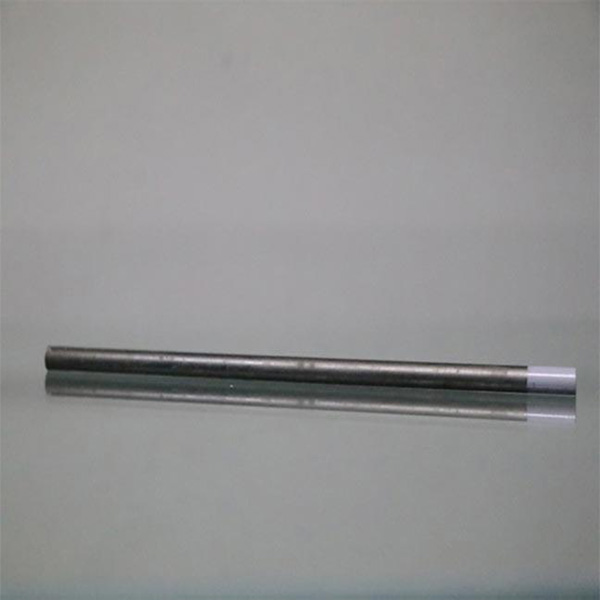
This material features high-melting, high density, anti-corrosion, and good conductivity of heat and electricity. During operations, it is securely fixed by a tungsten clamp and back cap within the torch. Normally, electrode diameters ranging from 2.4mm to 8.0mm are applied.
Main Arc: The electrode functions as the cathode, while the work piece acts as the anode.
Pilot Arc: The electrode functions as the cathode, while the nozzle acts as the anode.
* Important Safety Tip: When putting on or taking off the components, please ensure the pilot arc is completely off.
Generally, it is proper to retreat the electrode 2-4mm into the nozzle during installation, which is compatible with a standard tungsten calibrator.
Grind the tungsten electrode when the arc stream is disperse. The grind must be central, and the angle should be precisely 22° to avoid short circuits and ensure a proper starting arc.
Varying tungsten contents are indicated by disparate colors resulting from grinding and polishing. Pure tungsten has a very low electron launch efficiency and is susceptible to crystallization at high temperatures, which can cause the tungsten wire to break.
To overcome these performance limitations, rare earth elements are added. This integration successfully increases the recrystallization temperature and activates efficient electron emission.
The electrode is composed of a material featuring high-melting, high density, anti-corrosion properties, and good thermal and electrical conductivity.
Normally, electrode diameters between 2.4mm and 8.0mm are applied for standard torch setups.
In the main arc configuration, the electrode serves as the cathode and the work piece as the anode. In the pilot arc configuration, the electrode acts as the cathode and the nozzle functions as the anode.
It is generally appropriate to retreat the electrode 2-4mm into the nozzle during installation, which is compatible with a tungsten calibrator.
The electrode should be ground when the arc stream becomes disperse. The grinding must be centered with an angle of 22 degrees to prevent short circuits and facilitate a proper starting arc.
Pure tungsten has low launch efficiency and can crystallize and break at high temperatures. Adding rare earth elements prevents this by raising the recrystallization temperature and activating electron emission.