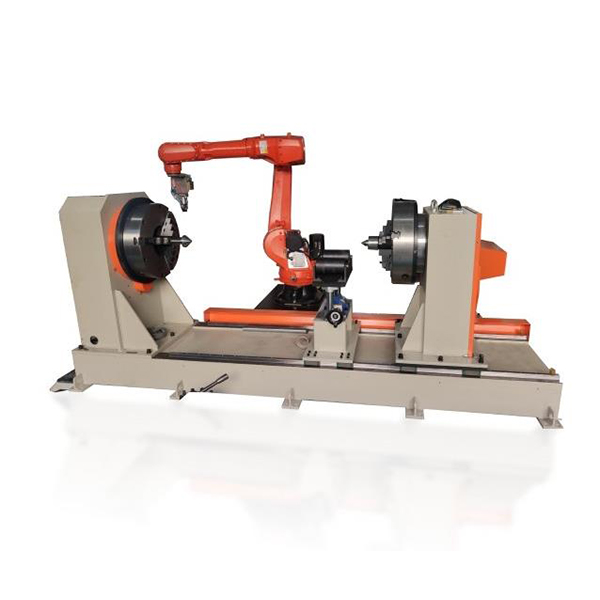
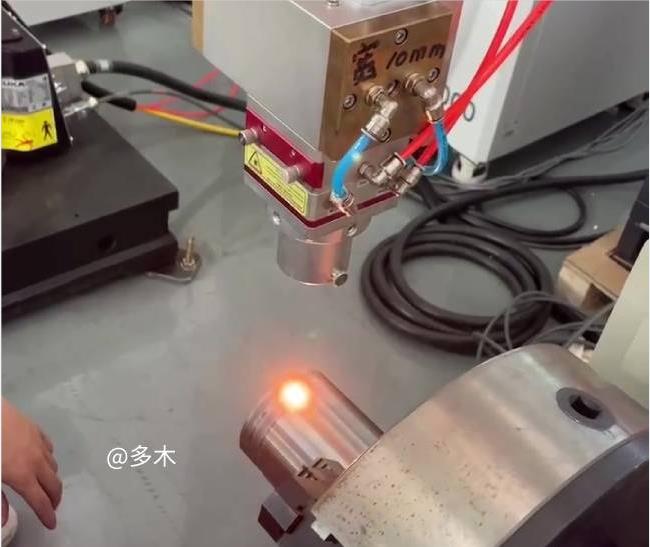
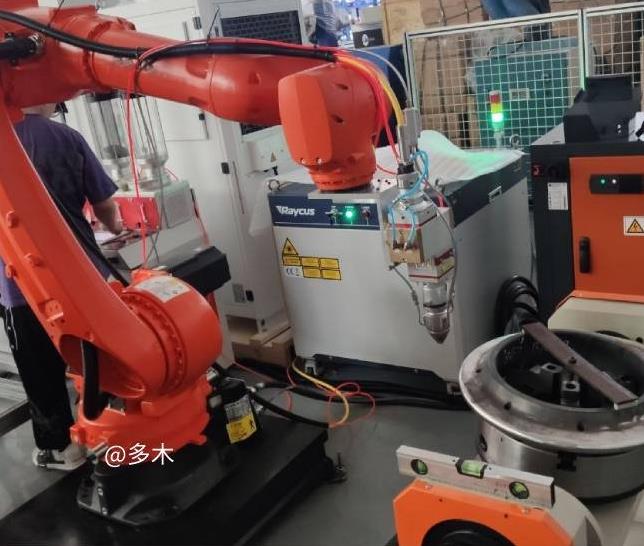
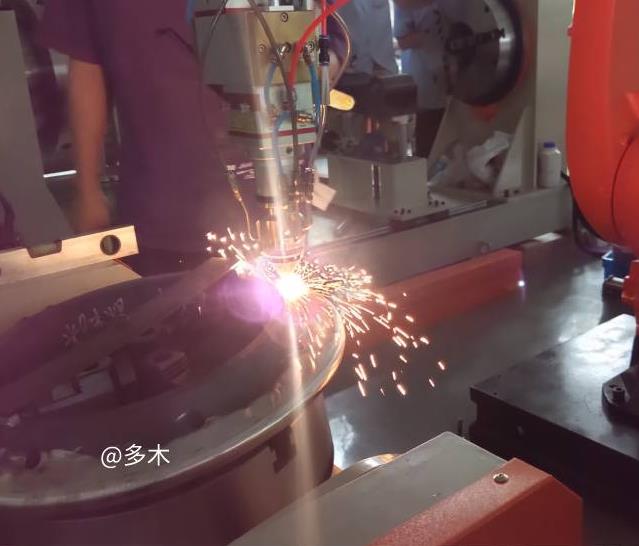
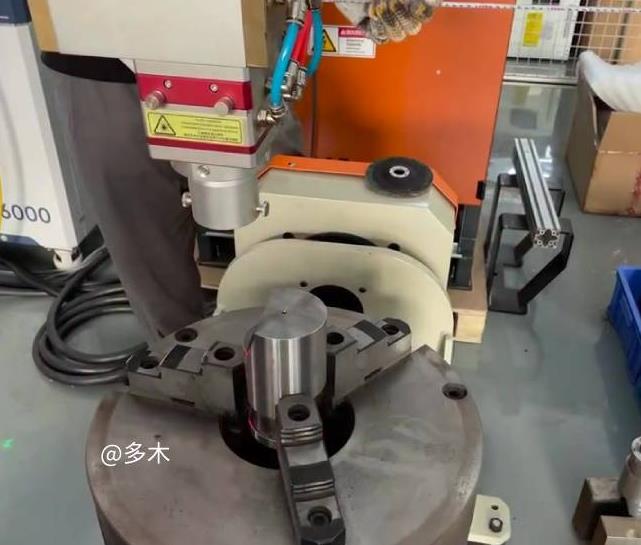
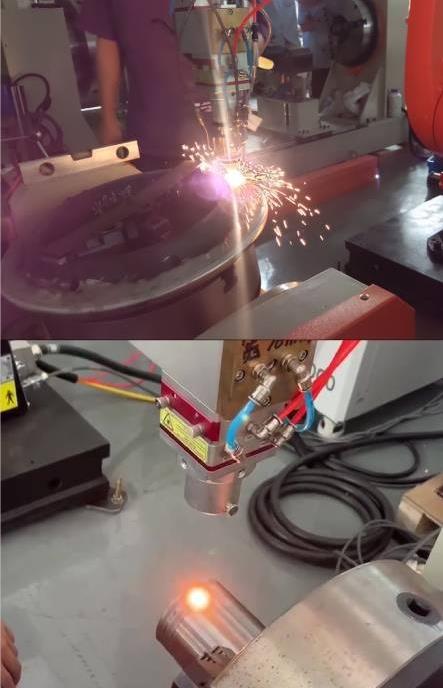
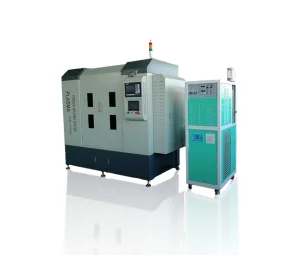
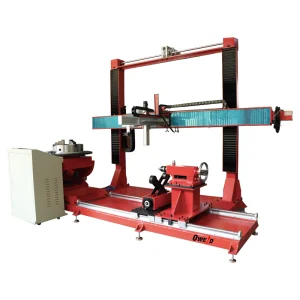
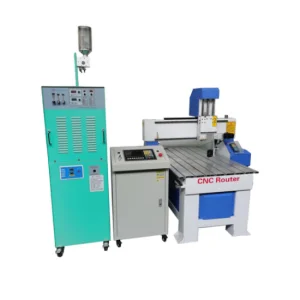
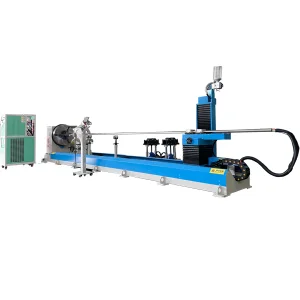
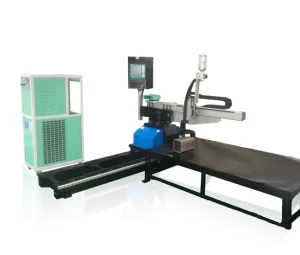
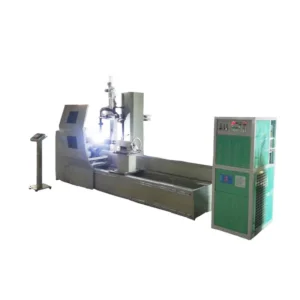
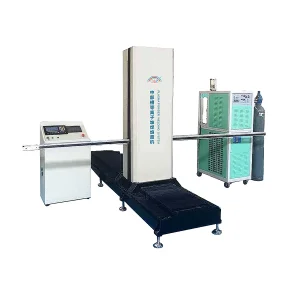
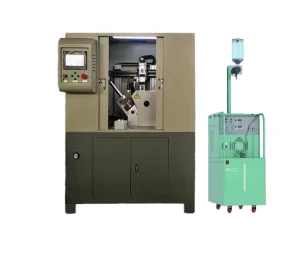
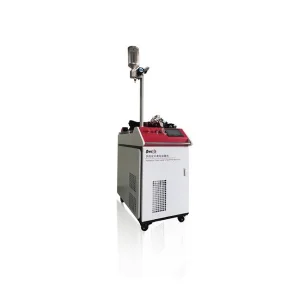
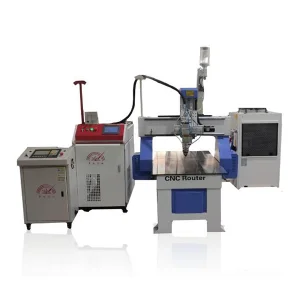
Laser quenching has high power density, fast cooling speed, no need of water or oil and other cooling media, is a clean and fast quenching process. And induction hardening, and flame hardening, carburizing and quenching process, compared with laser quenching hardened layer, high hardness (generally higher than induction hardening 1-3 HRC), small deformation, heating depth and heating trajectory is easy to control, easy to realize automation, don't need like induction hardening according to different design of the corresponding component size induction coil.
The processing of large parts does not need to be carburized quenching and other chemical heat treatment furnace size restrictions, so in many industrial fields are gradually replacing induction quenching and chemical heat treatment and other traditional processes. Especially important is that the deformation of the workpiece before and after laser quenching can be almost ignored, so it is especially suitable for high precision parts surface treatment.
Technical Specifications
The depth of the laser hardened layer is generally between 0.3 mm and 2.0mm, depending on the component composition, size and shape, and laser process parameters. When the tooth surface of large gear and the journal of large shaft parts are quenched, the surface roughness is basically unchanged, and it can meet the needs of actual working conditions without subsequent mechanical processing.
Laser Melting Quenching Technology
Laser melting quenching technology is the use of laser beam to heat the surface of the substrate above the melting temperature, due to the internal heat conduction cooling of the substrate, the surface of the melting layer is rapidly cooled and solidified. The obtained melt-quenched microstructure is very dense, and the microstructure along the depth direction is in order of melt-solidification layer, phase change hardening layer, heat affected zone and substrate.
Laser melting layer has deeper hardening depth, higher hardness and better wear resistance than laser quenching layer. The disadvantage of this technique is that the roughness of the workpiece surface is damaged to a certain extent, which generally needs to be restored by subsequent machining.
In order to reduce the roughness of the parts surface after laser melting treatment and reduce the amount of subsequent processing, special laser melting quenching coating has been prepared, which can greatly reduce the surface roughness of the melting layer. The surface roughness of rolls, guides and other workpieces of various materials in metallurgical industry treated by laser melting has been close to the level of laser quenching.
Applications & Materials
Laser quenching technology can be used to strengthen the surface of various guide rails, large gears, journal, cylinder wall, mold, shock absorber, friction wheel, roller, roller parts. Suitable material for medium and high carbon steel, cast iron.
●
Application example: The moving drawing book of cast iron engine cylinder strengthened by laser quenching increases its hardness from HB230 to HB680, and its service life increases by 2~3 times.
Gear is a widely used part in machinery manufacturing industry. In order to improve the bearing capacity of gear, it is necessary to harden the surface of gear. There are two main problems in the traditional gear hardening treatment, such as surface chemical treatment such as carburizing and nitride, induction surface quenching, flame surface quenching, etc., that is, the deformation is large after heat treatment and it is not easy to obtain uniform distribution of hardened layer along the tooth profile.
Key Advantages of Laser Quenching
01The quenching parts do not deform and the thermal cycle of laser quenching is fast.
02Almost no damage to surface roughness by using a thin coating with anti-oxidation protection.
03Numerical control quenching of laser quenching without cracking quantification.
04Numerical control quenching for local, groove and groove quenching location.
05Laser quenching is clean and does not require cooling media such as water or oil.
06The hardness of quenching is higher than that of conventional method, the microstructure of quenching layer is fine, and the toughness is good.
07Rapid heating, self-quenching, does not need furnace insulation and coolant quenching; a pollution-free green process.
08Small heat affected area and instant local heating quenching ensure minimal mold deformation.
09Small beam divergence and good directivity allow for precise local quenching via light guide systems.
10Hardening layer depth typically ranges from 0.3 ~ 1.5mm.
Equipment Selection Criteria
Equipment used includes semiconductor fiber output laser, fiber laser, and all-solid-state laser. Semiconductor fiber output lasers are widely used for quenching. Selection should consider:
✔Beam quality, electro-optical conversion rate, and mode stability.
✔Stability of laser output power.
✔High reliability for continuous industrial processing.
✔Maintenance, fault diagnosis, and linkage functions.
✔Simple and convenient operation.
✔Economic/technical ability and credibility of the manufacturer.
✔Guaranteed supply of wearing parts.
Frequently Asked Questions
Q1: What are the main benefits of laser quenching compared to induction hardening?
Laser quenching offers higher hardness (1-3 HRC higher), minimal deformation, and easier control of the heating trajectory without the need for custom induction coils for different parts.
Q2: How deep is the hardened layer achieved by laser quenching?
The depth typically ranges from 0.3 mm to 2.0 mm, depending on the material composition and specific laser process parameters.
Q3: Does laser quenching require cooling media like water or oil?
No, laser quenching is a clean process that utilizes self-quenching through internal heat conduction of the substrate, eliminating the need for external cooling media.
Q4: What is the difference between laser quenching and laser melting quenching?
Laser melting quenching heats the surface above the melting point, resulting in a denser microstructure, deeper hardening, and better wear resistance, though it may require subsequent machining to restore surface roughness.
Q5: Which materials are most suitable for laser quenching?
The process is ideally suited for medium and high carbon steels, as well as various types of cast iron.
Q6: Can laser quenching be used for high-precision parts?
Yes, because the deformation of the workpiece is almost negligible, it is particularly suitable for the surface treatment of high-precision components.