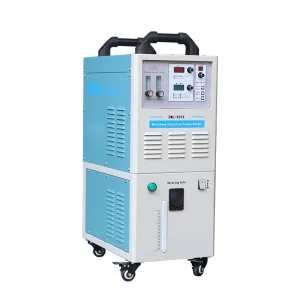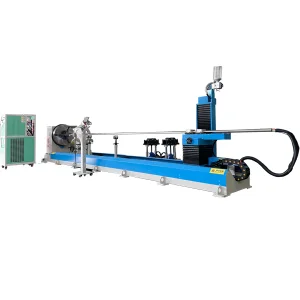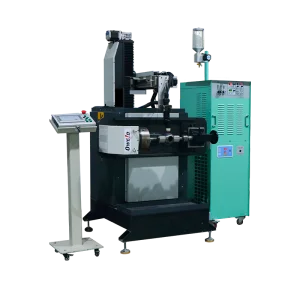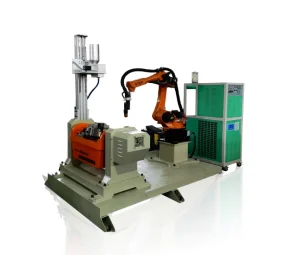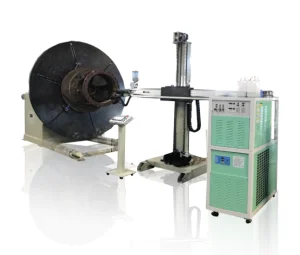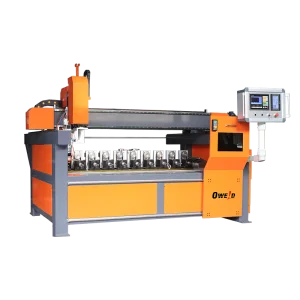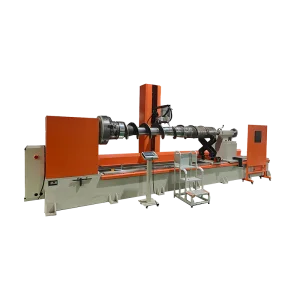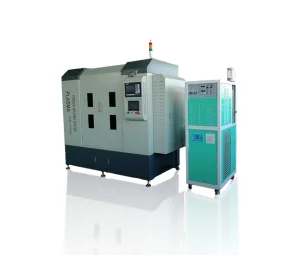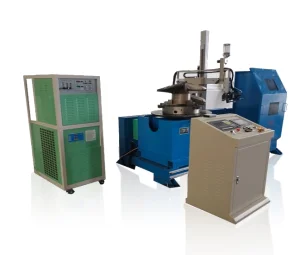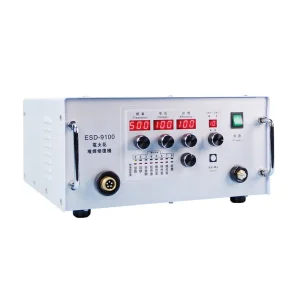
In the contemporary industrial era, the longevity and reliability of critical components are paramount. The global market for آلة تشكيل الكسوة الفعالة والموثوقة (Effective and Reliable Cladding Machines) has transitioned from a niche specialized service to a foundational pillar of sustainable manufacturing. As industries strive for carbon neutrality and circular economic models, the ability to repair, reinforce, and remanufacture heavy-duty components is no longer optional—it is a strategic imperative.
From the deep-sea oil rigs of the Gulf of Mexico to the high-precision aerospace labs in Toulouse, surface engineering via cladding provides a metallurgical bond that far exceeds traditional thermal spray or plating techniques. The integration of Plasma Transferred Arc (PTA) and Laser Cladding technologies has allowed manufacturers to deposit high-performance alloys (such as Stellite, Inconel, and Tungsten Carbides) onto lower-cost base metals, effectively creating a "super-component" that resists extreme wear, heat, and corrosion.
Utilizing micro-plasma and laser systems for turbine blade refurbishment and structural component reinforcement with zero-distortion tolerances.
Enhancing valve seats, stabilizers, and drill bits to withstand high-pressure, sour gas environments and abrasive geological formations.
Heavy-duty hardfacing for crushing rollers, conveyor screws, and excavation picks, extending service life by up to 500%.
Understanding the technical nuances between different cladding modalities is essential for optimizing Information Gain in industrial procurement. Shanghai Duomu’s R&D focus lies at the intersection of metallurgical integrity and automated precision.
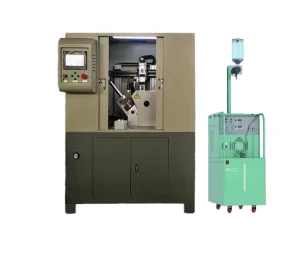
PTA technology remains the "workhorse" of the industry. By using a constricted plasma arc to melt both the base metal and the additive powder, PTA achieves a high deposition rate with an exceptionally low dilution rate (often < 5%). This ensures that the properties of the expensive alloy cladding are not compromised by the base metal's composition.
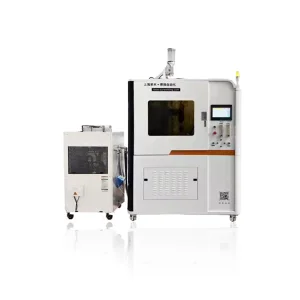
Laser cladding represents the pinnacle of precision. With a significantly smaller Heat Affected Zone (HAZ), laser systems are ideal for delicate components where thermal distortion must be avoided. The rapid cooling rates inherent in laser processing lead to a fine-grained microstructure, often resulting in superior hardness and wear resistance compared to conventional methods.
In hardfacing, dilution is the mixing of the cladding alloy with the substrate metal. High dilution dilutes the high-value elements (like Cobalt or Chrome), reducing the protective qualities of the layer. Our DSL-LC401 and DYY-LC501 systems are specifically engineered to maintain metallurgical purity at the surface interface.
In regions with highly abrasive soil, such as the Midwest US or Northern China, plowshares and harvester blades treated with plasma powder surfacing exhibit significantly lower wear-off rates, maintaining fuel efficiency for tractors.
For the construction industry, hydraulic rods are prone to scoring and corrosion. Our automatic cladding systems allow for the precise restoration of rod surfaces, meeting OEM specifications at a fraction of the cost of new replacements.
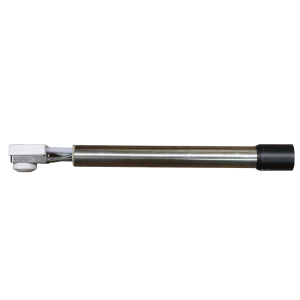
Inner hole cladding for double cone injection molding barrels requires specialized torches. The DNPT30018-HQ plasma bore welding torch provides the reach and stability needed for deep-internal surfacing.
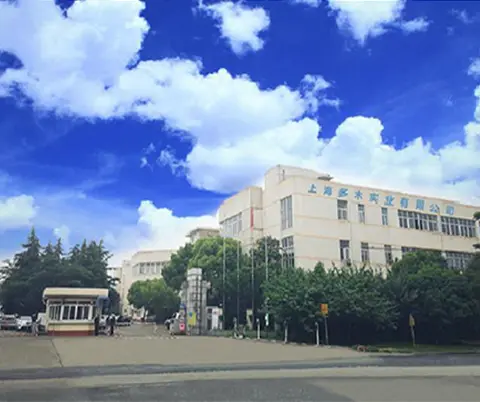
Shanghai Duomu has established itself as a leading manufacturer and exporter of PTA cladding machines and Laser cladding machines. Our strength lies in our independent R&D team, which bridges the gap between theoretical metallurgy and practical industrial application.
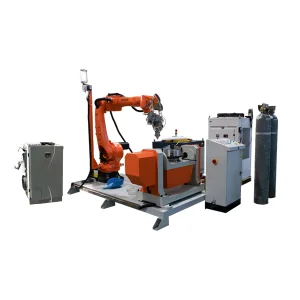
We don't just sell equipment; we provide Macro Industry Solutions. This includes process parameters development, powder selection consulting, and fully integrated robotic cells for large-scale remanufacturing projects.
The future of آلة تشكيل الكسوة is inextricably linked with Industry 4.0. We are moving toward "Intelligent Cladding," where real-time sensor feedback adjusts laser power or powder flow rate instantaneously to compensate for variations in substrate temperature or geometry.
Hybrid Manufacturing: By combining CNC machining with additive cladding in a single setup, we reduce setup times and eliminate the errors associated with moving heavy workpieces between machines. This is particularly vital for the nuclear power and aerospace sectors where precision is non-negotiable.
PTA Hardfacing Efficiency: Improving PTA hardfacing efficiency is not simply about increasing welding speed. Real industrial efficiency depends on dilution control and powder utilization.
Oil & Gas Maintenance: The real cost is downtime. Whether it's a choke valve or a mud pump seat, cladding provides a faster, cheaper alternative to component replacement.
Conveyor Systems: Screw conveyors are critical. Maintenance data shows they are leading causes of unplanned production stops. Our automated cladding solves this.