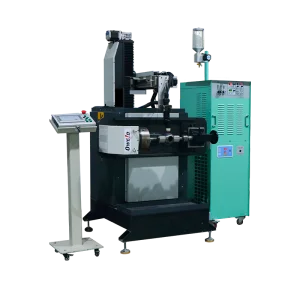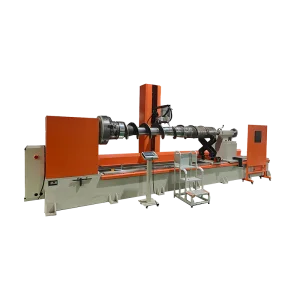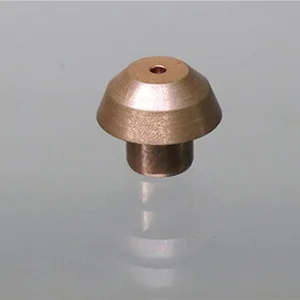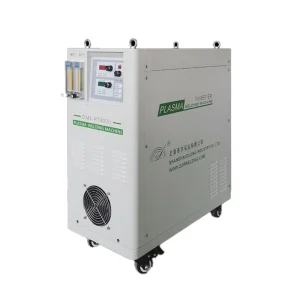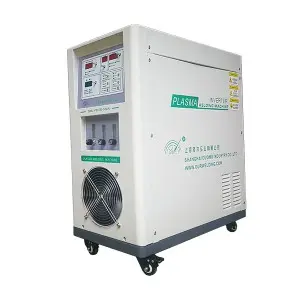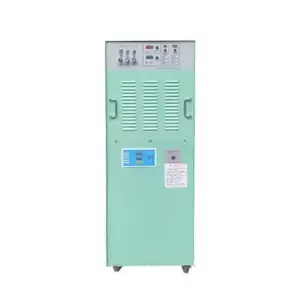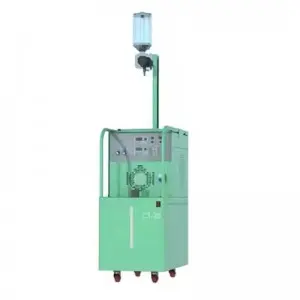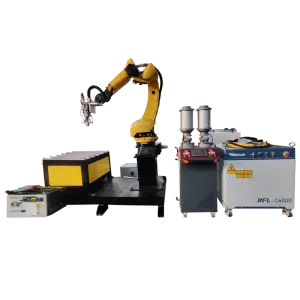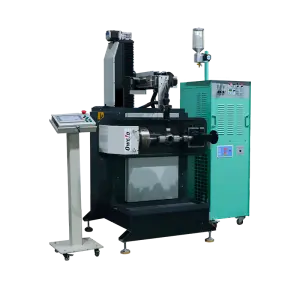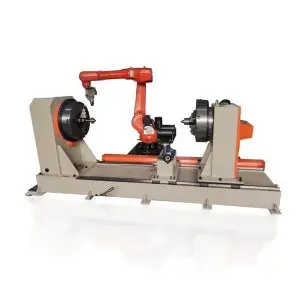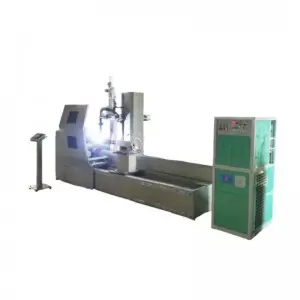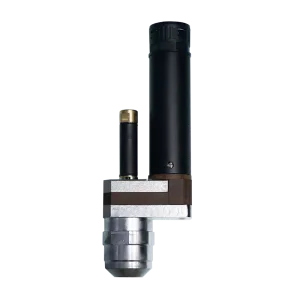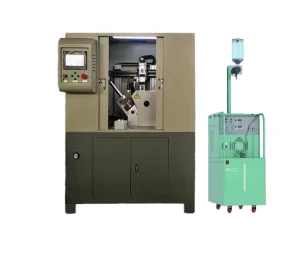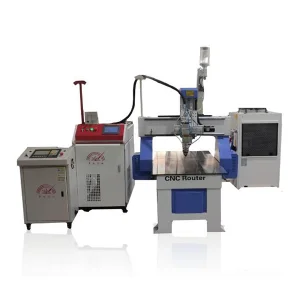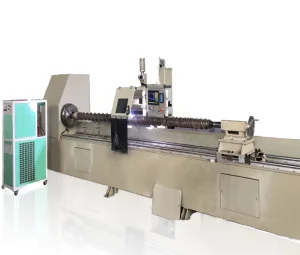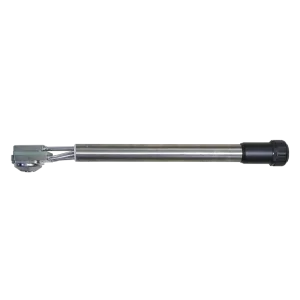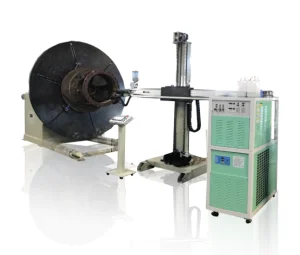
Explore our state-of-the-art systems designed to deliver precise welds, minimizing defects while optimizing cycle times for industrial production lines.
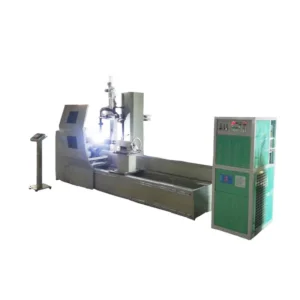
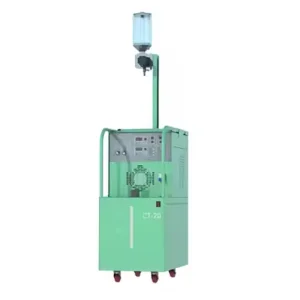
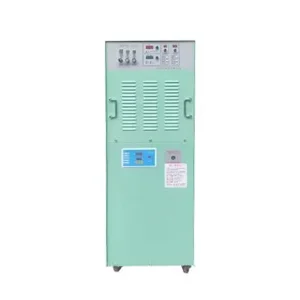
In modern manufacturing ecosystems, selecting the optimal metallurgical joining technique represents a multi-million dollar decision. While Tungsten Inert Gas (TIG) welding, also known as Gas Tungsten Arc Welding (GTAW), remains a cornerstone of precision fabrication, global industries are increasingly analyzing its ventajas y desventajas (advantages and disadvantages) when contrasted against advanced fusion processes like Plasma Transferred Arc (PTA) cladding and Laser Cladding.
For heavy industry procurement leaders, the primary objective is to maximize component reliability, reduce dilution rates, and optimize operational efficiency. This whitepaper analyzes the structural benefits and operational limits of custom TIG welding solutions, detailing how Shanghai Duomu's state-of-the-art PTA and laser technology address the productivity gaps inherent to traditional arc welding processes.
"In safety-critical sectors such as aerospace engineering and nuclear power generation, the metallurgical integrity of a joint cannot be compromised. However, the throughput limits of manually executed TIG systems have forced factories to pivot toward automated PTA and laser-assisted cladding technologies."
TIG welding is celebrated across industrial manufacturing plants for its distinct technical superiorities. Its ability to create exceptionally clean, high-density, and defect-free joints makes it indispensable. Below is an exhaustive breakdown of the core benefits:
Unlike MIG or Shielded Metal Arc Welding (SMAW), TIG uses a non-consumable tungsten electrode. This allows the operator or automated robot to control the heat input and the weld pool with microscopic precision. The absence of spatter ensures that post-weld machining and finishing costs are reduced by up to 80%.
TIG welding can join nearly all industrial metals, including carbon steels, stainless steel, aluminum alloys, titanium, copper, nickel base alloys, and magnesium. This makes custom TIG setups highly favorable for aerospace components where non-ferrous metals are widely utilized.
By utilizing high-purity shielding gases (typically Argon or Helium), TIG protects the weld pool from atmospheric contaminants (Oxygen, Nitrogen, and Hydrogen). The resulting joint exhibits excellent tensile strength and fatigue resistance, essential for pressure vessels and petrochemical pipelines.
Despite its metallurgical advantages, the deployment of custom TIG setups inside high-volume production factories presents significant bottlenecks. These shortcomings limit the growth capability of factories seeking to scale their operations.
TIG welding is a fundamentally slow process. Manual TIG typically yields deposition rates of only 0.5 to 1.5 kg/h. In contrast, automated PTA cladding systems can exceed 5 kg/h, and high-power laser cladding systems offer even higher deposition efficiency, severely limiting TIG's applicability in large-scale component repair.
Because TIG has a relatively slow travel speed, the cumulative heat input injected into the base metal is high. This creates a wide Heat-Affected Zone (HAZ), leading to geometric distortion and structural weakening of the workpiece—a critical defect for thin-gauge sheets and complex gantry components.
Achieving structural grade TIG welds requires years of training. The shortage of skilled welders globally has caused labor costs to surge. While robotic TIG integration is possible, programming and maintaining these systems requires advanced engineering knowledge, driving up capital expenditure.
For factories evaluating automated cladding, hardfacing, and welding systems, it is vital to contrast traditional TIG mechanisms against advanced alternatives. The following table showcases the operational parameters of each technology, detailing why industries are upgrading their machinery:
| Technical Parameter | TIG Welding (GTAW) | Plasma Transferred Arc (PTA) | Laser Cladding Technology |
|---|---|---|---|
| Heat-Affected Zone (HAZ) | Wide (5.0 - 8.0 mm) | Medium (1.5 - 3.0 mm) | Ultra-Narrow (0.2 - 0.8 mm) |
| Base Metal Dilution Rate | High (15% - 25%) | Low (5% - 10%) | Minimal (< 2% - 5%) |
| Deposition Rate (Speed) | 0.5 - 1.5 kg/h | 3.0 - 6.0 kg/h | Up to 8.0+ kg/h |
| Consumable Flexibility | Wire / Rods Only | Powder (Highly Flexible Alloys) | Powder & Wire Systems |
| Automation Readiness | Moderate (Requires High Tuning) | High (Easily Integrated) | Excellent (Fully Digital Control) |
When procuring industrial welding machinery, purchasing managers face systemic hurdles. TIG welding equipment presents low initial capital expenditure (CAPEX), making it attractive for small fabricators. However, for multinational manufacturers, the operating expenditure (OPEX) is high due to the necessity of skilled labor and low throughput rates.
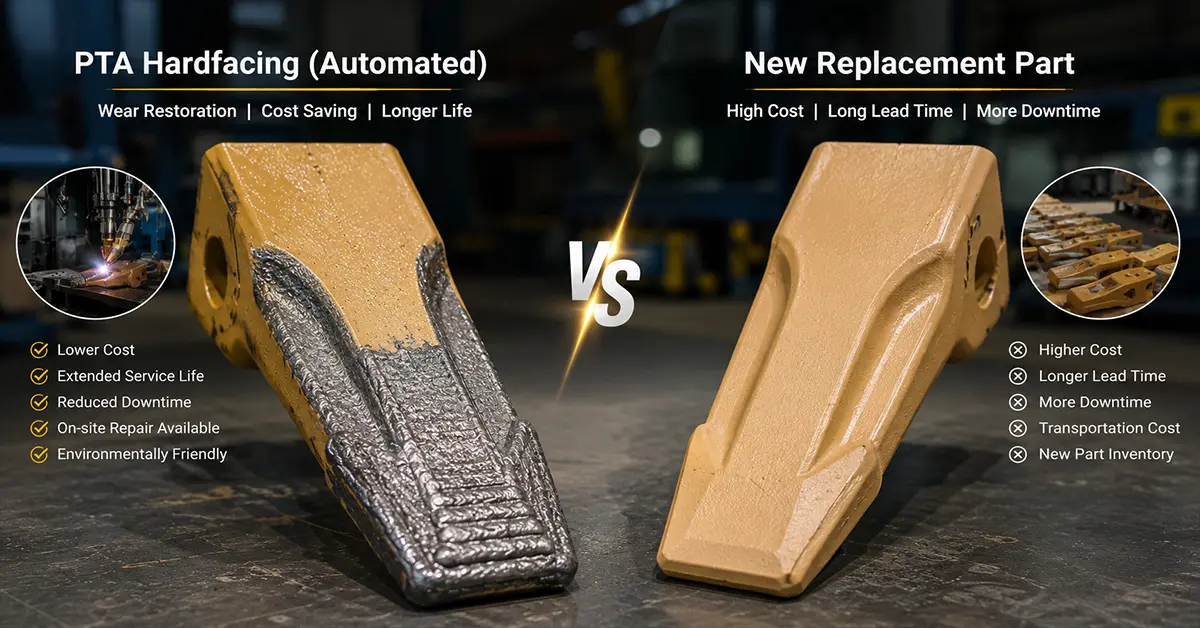
Globally, industrial enterprises are transitioning toward automated PTA Cladding and Laser Cladding systems to perform critical tasks like hardfacing valve components, agricultural screws, and hydraulic rods. By reducing the dilution rate, factories can save up to 40% on premium alloy powder consumables (such as Stellite, Colmonoy, and tungsten carbide matrices). This economic advantage makes modern cladding machines highly profitable options for automated factories.
Heavy machinery operating in abrasive and high-temperature environments requires advanced structural surface protection. Industrial wear is not merely a maintenance issue—it represents significant unplanned downtime.
Shanghai Duomu's engineering division designs systems targeting these macro-level problems:
The future of industrial fabrication belongs to digital automation and hybrid additive manufacturing. Shanghai Duomu's technical roadmap focuses on the integration of Artificial Intelligence (AI) and Machine Learning into the weld monitoring cycle. By tracking weld pool dynamics, real-time dilution rates, and acoustic signatures, our next-generation systems will automatically adjust amperage and powder feed rates.
This smart feedback loop minimizes operator dependency and guarantees zero-defect production outputs, bringing the metal joining process fully in line with Industry 4.0 standards.
At present, our company's high-tech products have penetrated into crucial engineering sectors, providing robust structural reinforcement and precision welds.

Enhancing the abrasive wear resistance of soil-engaging tools, screw conveyors, and harvester blades.

Providing high-precision joining and cladding solutions with low heat input and minimal warping.
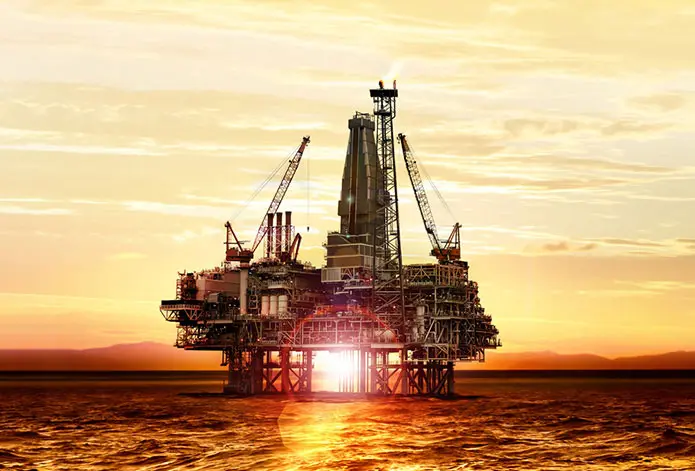
Corrosion-resistant overlays on valves, mud pumps, and stabilizers for deep offshore environments.
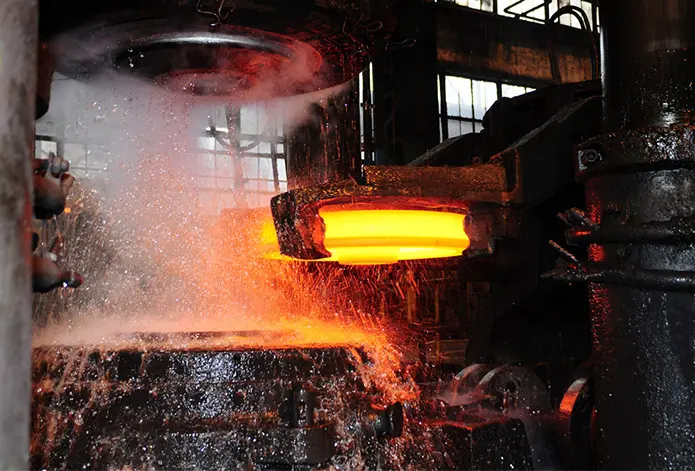
Thermal fatigue resistant cladding for roller guides, casting molds, and steel mill equipment.
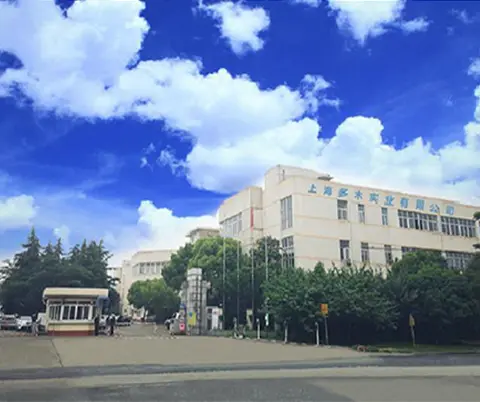
Shanghai Duomu has been a leading manufacturer and exporter of PTA cladding machines and Laser cladding machines for more than ten years. Backed by a strong technical background and continuous R&D investment, we specialize in delivering hardfacing solutions that directly extend component service life.
Our mission is to help global factories solve high-wear, high-temperature, and corrosive challenges through automation. We focus on low-dilution, high-speed cladding technologies that outperform standard manual TIG welding setups.
Read More About Us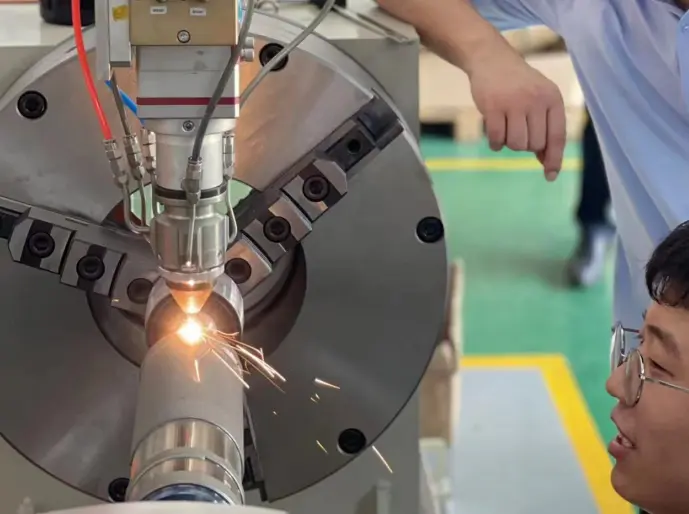
We operate an independent R&D team that develops, produces, and sells plasma cladding machine equipment. Our welding systems are designed to maintain efficient long-term operations under harsh industrial conditions.
In addition, our laser cladding equipment supports large-scale remanufacturing projects. By using mature metallurgical processing and structural alignment technology, we provide complete, turn-key industrial equipment solutions.
Get In TouchWe provide customized machinery, automatic laser cladding equipment, automatic plasma cladding equipment, and intelligent robot cladding systems tailored to your specific application requirements.
Read feedback and industry analyses from metallurgy experts who have successfully integrated our advanced cladding and surfacing systems.
"In Plasma Transferred Arc (PTA) hardfacing, achieving a high-quality overlay is not only about selecting the right alloy powder or optimizing welding parameters. One of the most critical factors that directly affects overlay performance is the dilution rate. Minimizing dilution preserves the mechanical integrity of the protective wear plate."
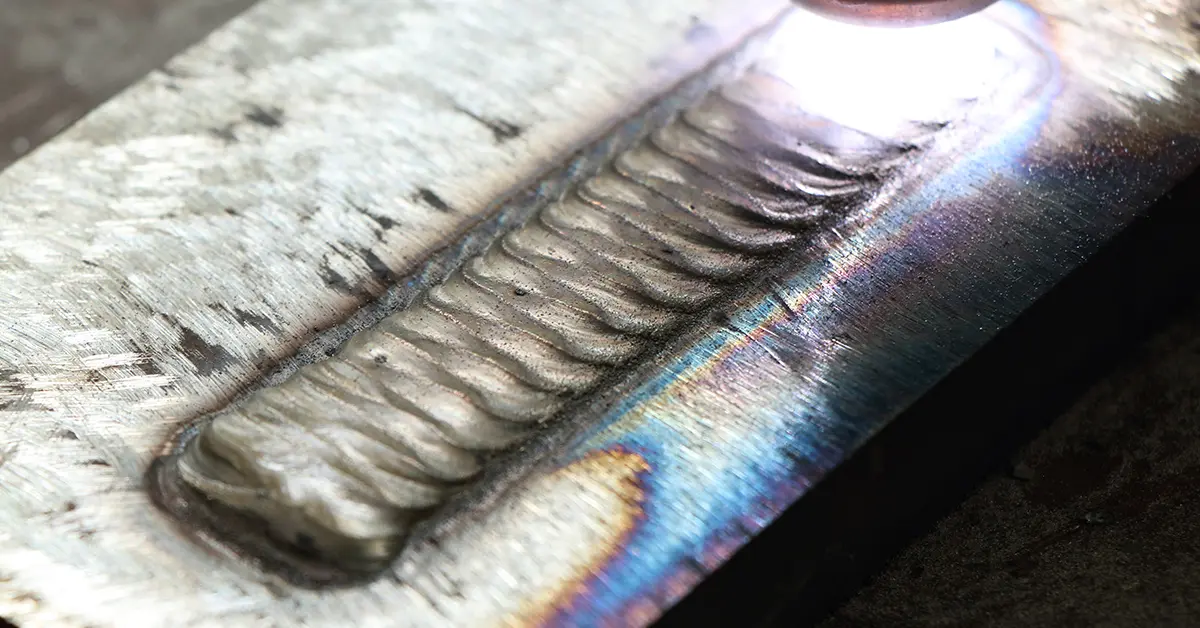
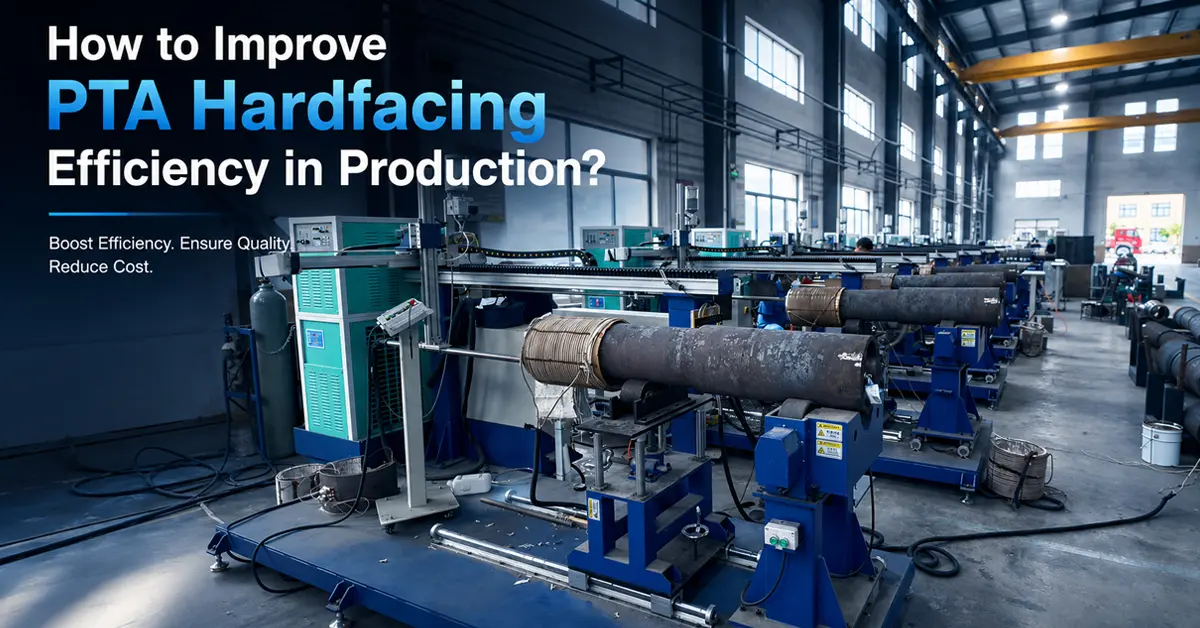
"Improving PTA hardfacing efficiency is not simply about increasing welding speed or depositing more alloy within a shorter time. In industrial production, the real efficiency of a Plasma Transferred Arc (PTA) hardfacing process depends heavily on arc stability, powder utilization rates, and minimizing post-cladding machining."
"In Oil & Gas, the Real Cost Is Downtime—Not the Component. When a choke valve fails due to sand erosion, a mud pump valve seat wears beyond tolerance, or a drill stabilizer reaches the end of its service life, the traditional response of replacement is no longer viable. PTA cladding offers a fast, reliable, and cost-effective restoration solution."
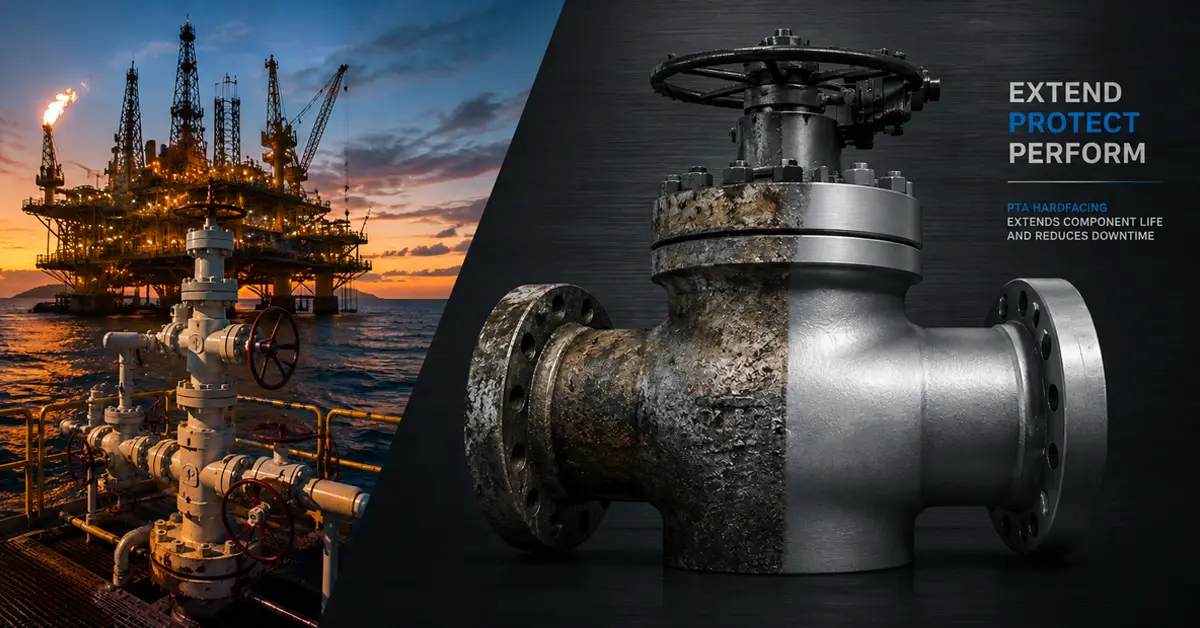
"For industrial equipment operating in abrasive, erosive, corrosive, or high-temperature environments, wear is inevitable. The real challenge is not preventing wear altogether but choosing the most cost-effective maintenance strategy once wear occurs. Surface cladding allows components to withstand severe stress at a fraction of the cost."
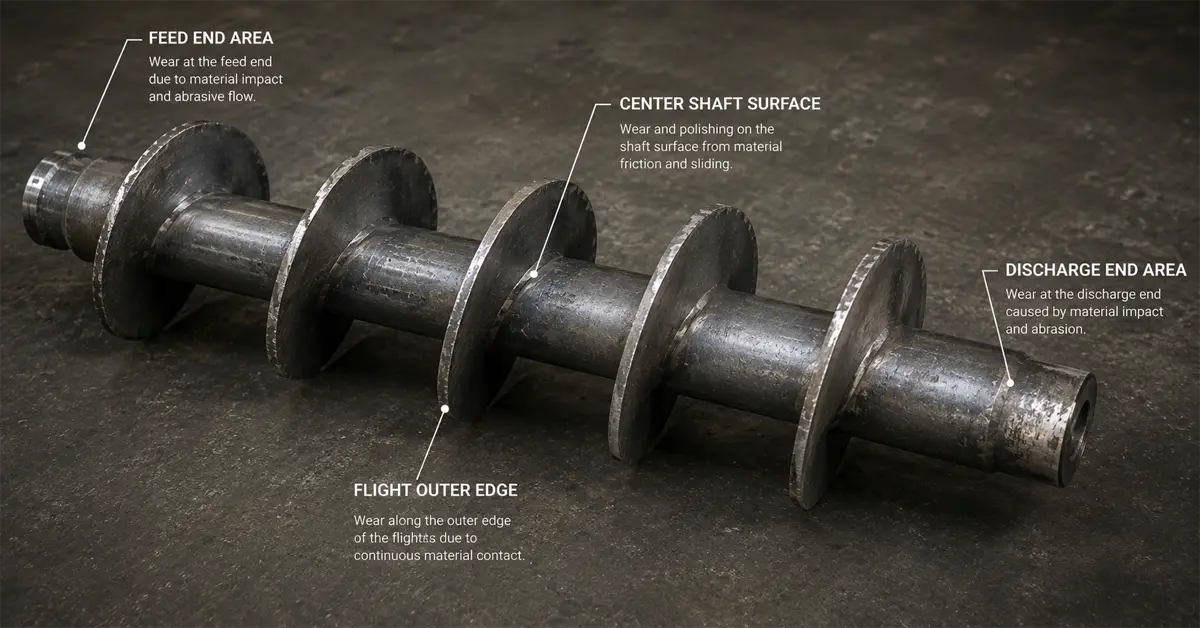
"In industries such as mining, cement, power generation, steelmaking, chemical processing, and biomass energy, screw conveyors are often regarded as auxiliary equipment. However, maintenance data shows that they are among the most frequent causes of unplanned production delays. Automated cladding helps maintain constant material flow."
Technical answers to help your procurement and engineering teams choose the right welding setup.
We collaborate with global component suppliers, metallurgical researchers, and automation integrators.












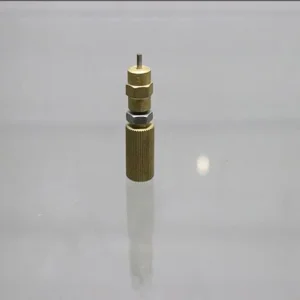
Configure your production line with custom torches, automatic positioners, and tungsten preparation equipment to ensure consistent arc control.
Get in touch with Shanghai Duomu to configure your automated plasma, laser cladding, or custom TIG systems.