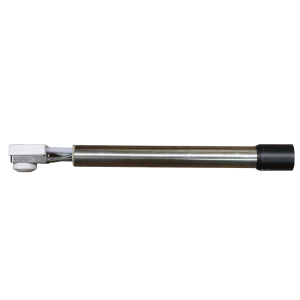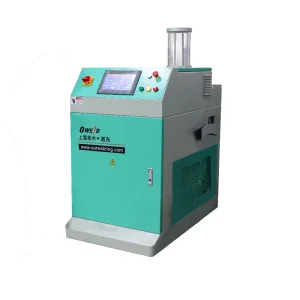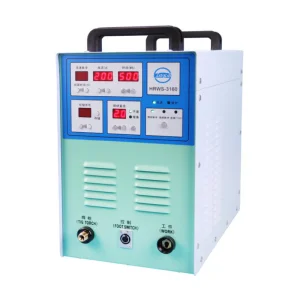
Explore our core engineering hardware designed to overcome common processing disadvantages in industrial laser welding setups
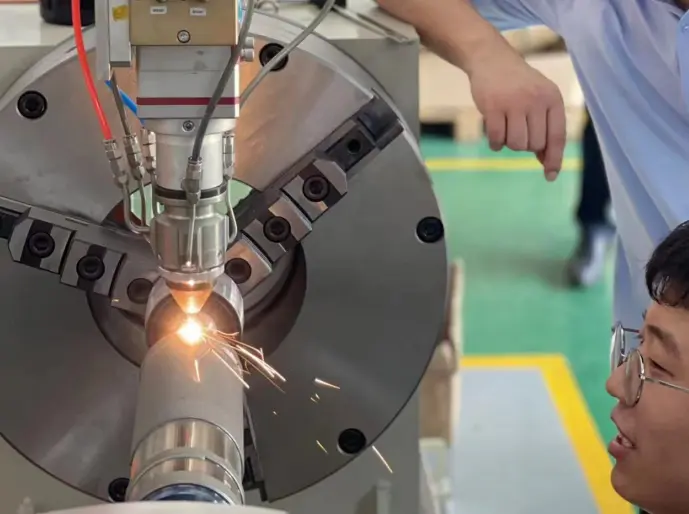
Laser welding (Laserschweißen) is widely celebrated for its speed, focused thermal input, and low distortion. However, when evaluating the transition to laser systems, procurement officers and production managers must carefully weigh the significant limitations (Nachteile) associated with this technology. Understanding these trade-offs is crucial for avoiding costly integration failures.
1. High Initial Capital Outlay (CAPEX): The cost of high-power laser sources, multi-axis CNC or robotic positioning systems, and specialized safety enclosures is exceptionally high compared to conventional Plasma Transferred Arc (PTA) or MIG/TIG systems.
2. Ultra-Strict Joint Tolerance & Fit-Up Requirements: Because the focused laser beam is incredibly narrow, even sub-millimeter misalignment between joint edges can result in incomplete fusion or severe weld defects. This necessitates expensive high-precision machining and tooling prior to welding.
3. Rapid Solidification and Microstructural Cracking: The rapid heating and cooling cycles characteristic of laser processing can lead to high residual stresses and brittle martensitic transformations in high-carbon steels or alloys. Without precise powder cladding or preheating controls, weld failure rates rise.
A objective comparison of operational parameters, limitations, and investment profiles
| Technical Characteristic | Standard Laser Welding | PTA Cladding / Welding | Duomu Hybrid Systems |
|---|---|---|---|
| Initial CAPEX Investment | Very High (Typically >€150k) | Moderate (Highly cost-efficient) | Optimized & Customized ROI |
| Tolerance/Fit-up Requirement | Extremely Tight (< 0.1 mm) | Flexible (< 1.0 mm tolerance) | Adaptive Auto-Tracking |
| Dilution Rate Control | Low (Often < 5%) | Highly Controlled (5% - 10%) | Optimized for target metallurgy |
| Deposition Rate Capability | Low to Medium (Fine layers) | High (Up to 12 kg/h) | Dual Mode (High speed + High volume) |
| Safety Standards Required | Class 4 Laser Enclosure Needed | Standard Weld Arc Protection | Integrated Safety Interlocks |

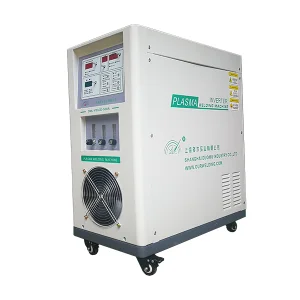
Shanghai Duomu has been a leading manufacturer and exporter of PTA cladding machines and Laser cladding machines for more than ten years, supported by a strong technical background. We recognize that while laser systems offer extreme precision, their inherent "Nachteile" often render them impractical for heavy-duty industrial surfacing.
To address these disadvantages, our independent technical R&D department develops, produces, and sells integrated systems that merge the speed of laser processing with the robustness of Plasma Transferred Arc (PTA) technology. This hybrid approach ensures:
Why international procurement teams partner with Shanghai Duomu for heavy industrial cladding and welding automation
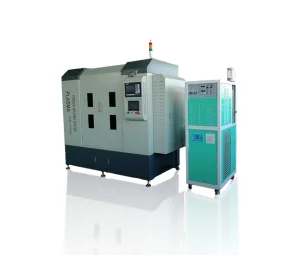
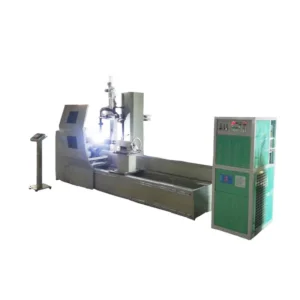
We provide specialized, custom equipment configuration, including automatic laser cladding machines, automatic plasma cladding machines, and intelligent robot integrations tailored to your floor layout and factory specs.
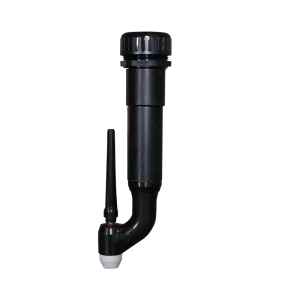
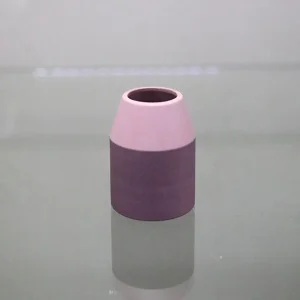
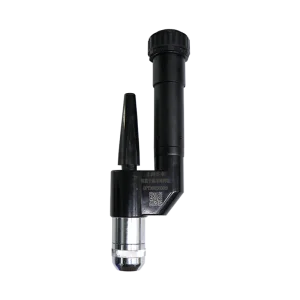
From raw heat-resistant tungsten electrodes and gas shield covers to complete multi-axis robotic cladding installations, we manufacture the entire system components in-house. This eliminates third-party supply chain bottlenecks.
All Duomu industrial systems are engineered to conform with rigorous international standards, resolving the safety-risk disadvantage of laser equipment class-4 setups with integrated optical interlocks and protective barriers.
Our PTA and Laser cladding systems are deployed globally to combat high wear, oxidation, and corrosion in critical operations



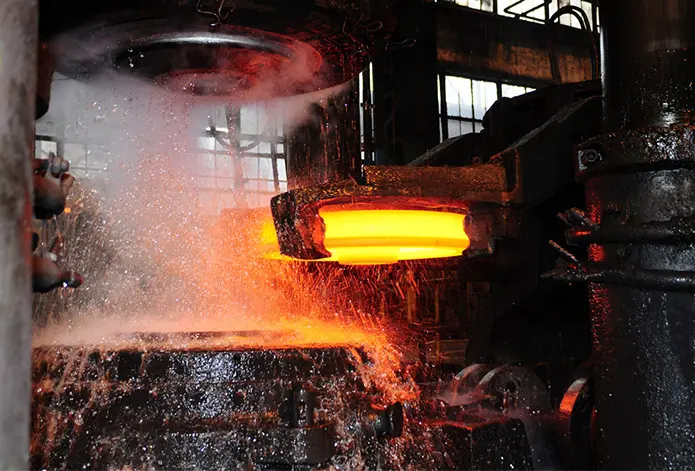
Scientific perspectives on optimizing dilution rates, reducing thermal distortion, and avoiding common weld defects
In Plasma Transferred Arc (PTA) hardfacing, achieving a high-quality overlay is not only about selecting the right alloy powder or optimizing welding parameters. One of the most critical factors that directly affects overlay performance is the dilution rate. Minimizing dilution preserves the raw hardness and corrosion resistance of the cladding alloy.
Improving PTA hardfacing efficiency is not simply about increasing welding speed or depositing more alloy within a shorter time. In industrial production, the real efficiency of a Plasma Transferred Arc (PTA) hardfacing process depends on the thermal management, deposition stability, and minimizing preheating steps.
In the Oil & Gas sectors, the real cost is downtime—not the component. When a choke valve fails due to sand erosion, a mud pump valve seat wears beyond tolerance, or a drill stabilizer reaches the end of its service life, the traditional response of scrapping can cost hundreds of thousands in delayed production. Laser or PTA cladding repairs these components in-situ.
For industrial equipment operating in abrasive, erosive, corrosive, or high-temperature environments, wear is inevitable. The real challenge is not preventing wear altogether but choosing the most cost-effective maintenance strategy once wear occurs. Many maintenance teams are transitioning from TIG to PTA and Laser hybrid repair setups.
In industries such as mining, cement, power generation, steelmaking, chemical processing, and biomass energy, screw conveyors are often regarded as auxiliary equipment. However, maintenance data shows that they are among the most frequent causes of unplanned production stoppages. Automated PTA cladding extends screw conveyor lifespan by up to 300%.
Addressing common queries regarding the disadvantages of laser welding and how Chinese factories mitigate these risks
The primary limitations are the high capital expense (CAPEX) for the laser source, extremely tight part fit-up tolerances (under 0.1 mm), potential cracking in high-carbon steels due to extreme cooling speeds, and the requirement of class-4 safety housing. Shanghai Duomu resolves this by offering integrated automated tooling, dual PTA-laser platforms, and cost-effective modular systems.
Laser welding requires highly precise joint alignment because the spot diameter of the laser beam is typically under 0.6 mm. Plasma Transferred Arc (PTA) cladding, however, has a wider arc column that can bridge gap variations of up to 1.5 mm, making it much more suitable for worn industrial components like agricultural machinery or drilling tools.
Shanghai Duomu provides complete installation support, detailed digital twin schematics, international-standard components (such as Siemens PLC systems, industry-standard torches), and 24-hour remote diagnostic assistance. We ensure that potential localized support gaps—a common concern with overseas manufacturers—are mitigated by direct, responsive engineering channels.
Yes. By utilizing localized induction preheating systems or opting for a hybrid PTA/Laser approach, we control the cooling curve. This prevents martensitic transformation embrittlement and microstructural cracking on complex surfaces like industrial valve seats and heavy shafts.
From automated multi-axis robot stations to specialized heavy-industry cladding equipment
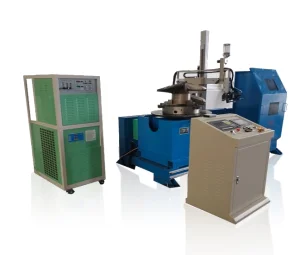
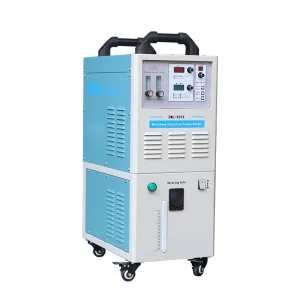









For inquiries about our PTA cladding machinery, automatic laser systems, or localized integration options, leave us a message and our technical engineering department will touch base within 24 hours.
Subscribe to our metallurgical research updates. Learn about optimal dilution rate controls and advanced hardfacing setups.
Subscribe to Technical Whitepapers