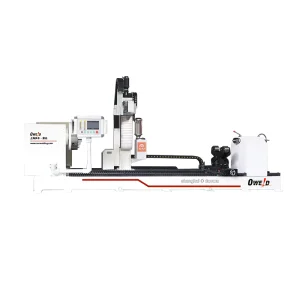
As global heavy industries push the boundaries of mechanical performance, operational environments are becoming increasingly hostile. Equipment deployed in mining, oil and gas extraction, power generation, and chemical processing must withstand intense abrasion, severe impact, chemical corrosion, and elevated operating temperatures.
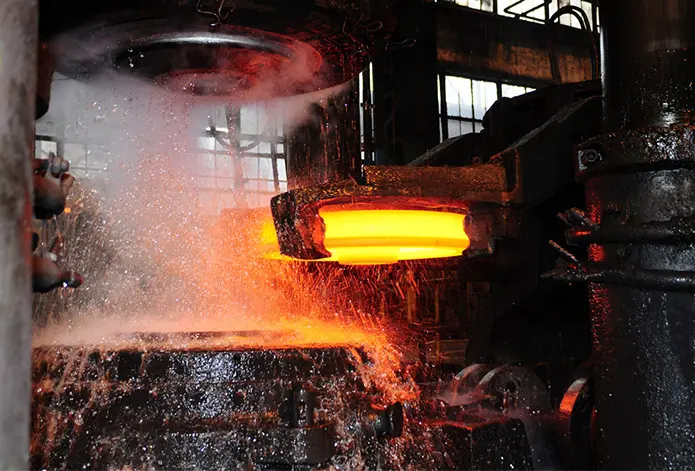
Traditional maintenance methods often rely on replacing worn components or applying mechanical thermal sprays. While effective in the short term, these approaches yield components susceptible to premature failure, peeling under shear stresses, and heavy structural distortion. Laser Cladding and Plasma Transferred Arc (PTA) systems offer a modern engineering solution by creating a metallurgical bond between the base substrate and the alloy coating, guaranteeing maximum performance under severe fatigue.
Understanding the physics behind these technologies is crucial for matching the right process to your specific application requirements:
| Parameter | Laser Cladding System | PTA Hardfacing System |
|---|---|---|
| Heat Source | Coherent, monochromatic High-Power Diode/Fiber Laser | Constricted, high-temperature plasma arc column |
| Dilution Rate | < 5% (Typically 1% to 3%) | 5% to 10% (Highly controlled) |
| Heat-Affected Zone (HAZ) | Minimal (0.2mm to 0.8mm) | Moderate (1.0mm to 2.5mm) |
| Deposition Rate | 1.0 - 5.0 kg/hr (Ultra-high speed setups: up to 10kg/hr) | 2.0 - 12.0 kg/hr (Excellent for thick builds) |
| Metallurgical Bond | 100% molecular fusion, extremely high shear resistance | 100% molecular fusion, dense, zero pore structure |
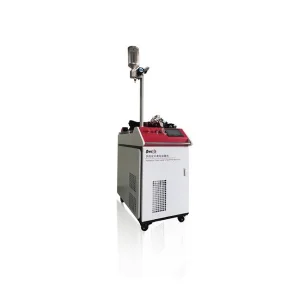
Laser Cladding employs a high-energy density laser beam as the heat source. The beam generates a micro-melt pool on the surface of the base material while introducing alloy powders. The rapid heating and cooling cycle results in a fine, homogeneous microstructure, and minimal thermal distortion of the substrate.
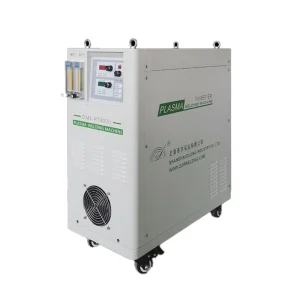
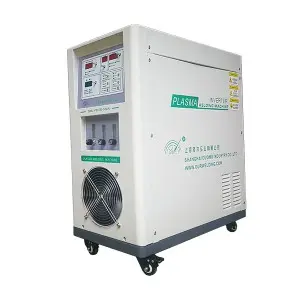
PTA Hardfacing utilizes a pilot arc to ignite a main plasma arc. The constricted gas flow focuses the thermal energy directly onto the substrate and alloy powder feed. PTA excels in heavy-duty applications that demand rapid material deposition, such as hardfacing mining excavator buckets, concrete screw shafts, and large engine valves.
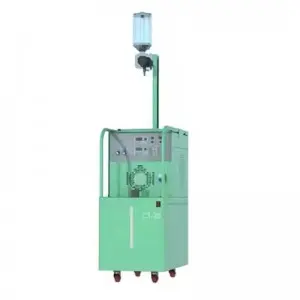
Shanghai Duomu has been a leading manufacturer and exporter of PTA cladding machines and Laser cladding machines for more than ten years, supported by a strong technical background. Our Shanghai headquarters serves as a global R&D hub for industrial surface processing systems.
We run an independent R&D team that develops, produces, and sells plasma cladding machine equipment. Our welding systems are designed for high stability, maintaining efficient, long-term operation under heavy industrial demands. In addition, the laser cladding equipment we sell supports large-scale remanufacturing projects. We offer mature technical solutions and complete sets of industrial equipment packages.
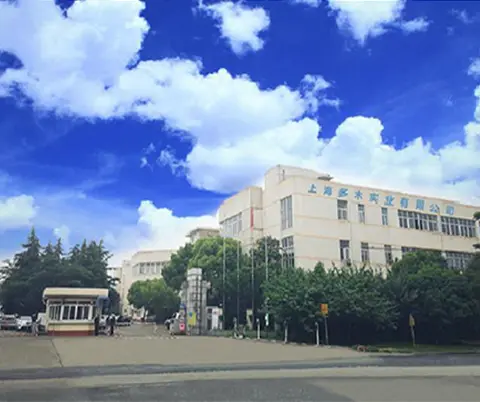
Our industrial cladding systems are deployed globally, protecting capital equipment and extending the operational lifespan of critical components in major sectors.
Extends the life of agricultural equipment by applying wear-resistant carbide coatings to tillage tools, harvester blades, and subsoil tips exposed to abrasive soil.
Enables high-precision restoration of turbine blades, compressor discs, and critical structural components utilizing nickel-based superalloys with minimal thermal impact.
Protects oilfield equipment by applying wear-resistant coatings to stabilizer ribs, mud pump rotors, and drill pipes operating in corrosive and abrasive environments.
Restores and protects hot rolling mill rolls, guide plates, and continuous casting rollers exposed to high mechanical loads, thermal fatigue, and oxidation.
In Plasma Transferred Arc (PTA) hardfacing, achieving a high-quality overlay depends on both selecting the right alloy powder and optimizing the welding parameters. One critical factor that directly affects overlay performance is the dilution rate.
Dilution occurs when the base metal melts and mixes with the deposited alloy, altering the chemistry of the protective layer. If the dilution rate is too high, the hardfacing layer's wear and corrosion resistance decreases, requiring thicker deposits to achieve the desired surface properties. By optimizing the arc constriction, powder feed rate, and travel speed, Shanghai Duomu's PTA systems keep dilution within strict target ranges while maintaining strong metallurgical fusion.
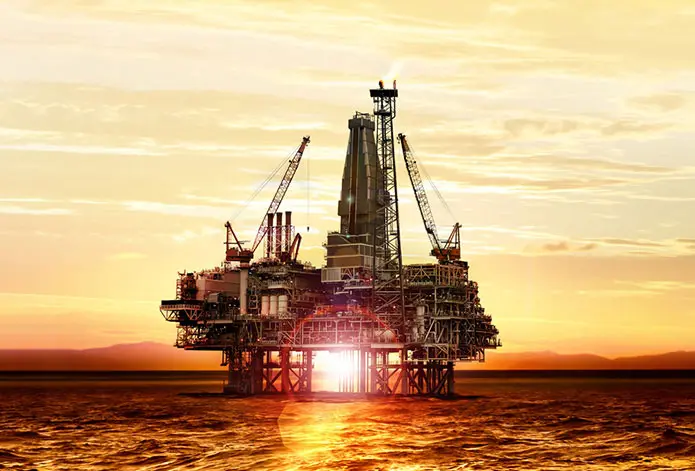
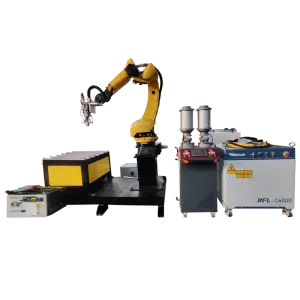
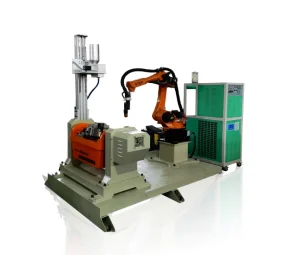
In oil and gas extraction, downtime costs can quickly exceed the price of individual components. When a choke valve fails, a mud pump valve seat wears beyond tolerance, or a drill stabilizer reaches the end of its service life, the traditional response was replacement. Using robot-integrated cladding, we apply tungsten carbide composites directly to wear zones, extending component lifespans by up to 300%.
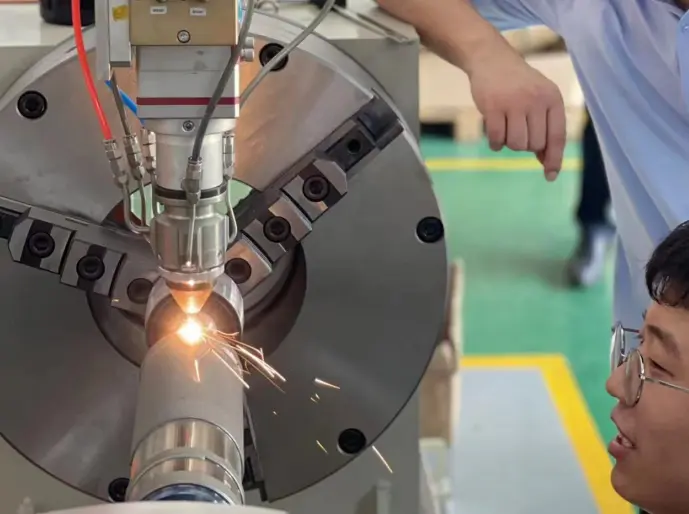
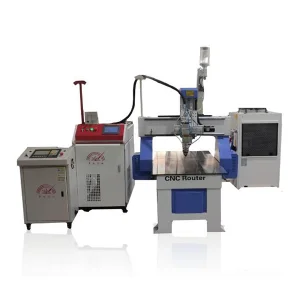
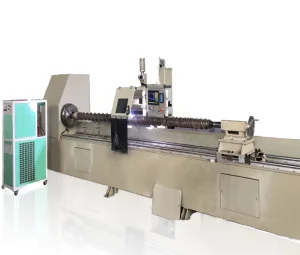
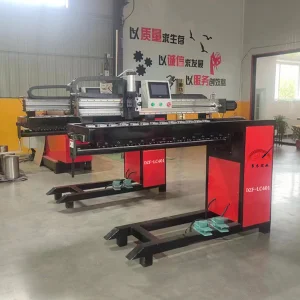
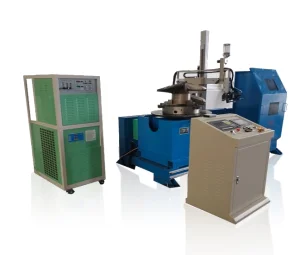
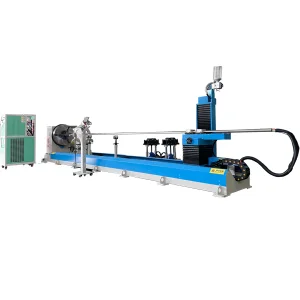
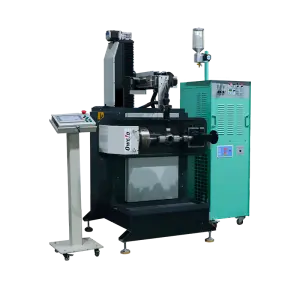
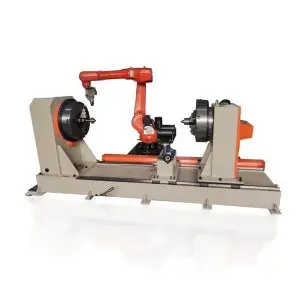
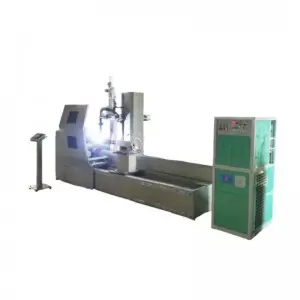
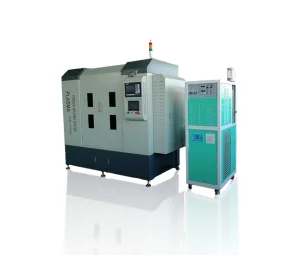
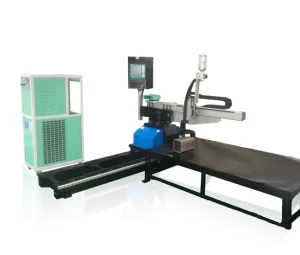
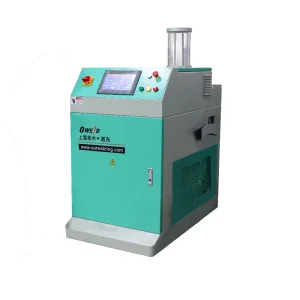
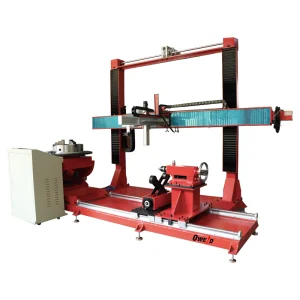
We provide custom equipment, automatic laser cladding equipment, automatic plasma cladding equipment, and intelligent robot cladding setups configured to client specifications. This includes industry-specific systems, such as hydraulic rod cladding machines, cutting pick cladding machines, and valve cladding systems.
Optimized for high-deposition hardfacing on industrial valves and drilling components.
Combines PTA hardfacing and automated welding controls into a single production station.
Features programmable PLC controls for processing complex parts and tooling geometries.
Designed for precise repair of steam and gas turbine blades with minimal heat-affected zones.
Provides high-speed rotation and deposition controls for standard ball valve surfaces.
A multi-axis robotic system engineered for localized surface hardening and alloy bonding.
Specifically configured for the surface restoration of hydraulic cylinder rods used in coal mining and heavy machinery.
The industrial surface treatment sector is shifting from basic repair tasks toward high-speed additive manufacturing. Standard laser cladding operates at travel speeds between 0.5 to 2.0 meters per minute. In contrast, Extreme High-Speed Laser Cladding (EHLA) reaches speeds of up to 200 meters per minute.
In EHLA systems, the laser melts the powder particles while they are still in flight, before they reach the melt pool. This ensures that a liquid droplets stream is deposited onto the base substrate, minimizing thermal energy input. As a result, cooling rates increase significantly, preventing common micro-cracking and allowing for the high-efficiency coating of thin-walled shafts.
Modern system installations are shifting from standard cobalt and nickel alloys toward customized metal matrix composites (MMCs). Combining spherical fused tungsten carbide (WC) with corrosion-resistant nickel alloy binders allows for cladding layers that resist high-impact friction in deep-well drilling environments.
Deploying advanced laser and plasma cladding systems globally requires strict compliance with international mechanical and electrical standards. Shanghai Duomu systems are manufactured to meet CE standards, ensuring safety, electromagnetic compatibility, and structural integrity.
Get in touch with our engineering office for system designs, quotation requests, and metallurgical process consultations.
Laser Cladding is preferred for precision hydraulic cylinders because of its minimal thermal input and heat-affected zone (HAZ), which helps prevent component distortion. PTA, on the other hand, is suited for larger, heavy-duty hydraulic shafts that require higher deposition rates and thicker protective coatings to resist severe mechanical wear.
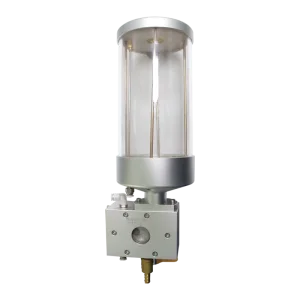
Our automated systems feature dual-wheel powder feeders with closed-loop controls. These setups regulate gas flow rates and rotation speeds to deliver a consistent powder stream to the melt pool, maximizing material deposition efficiency.
Yes, both our Laser and PTA cladding systems are compatible with a wide range of industrial alloy powders, including Stellite (cobalt-based), Inconel (nickel-based), Fe-based alloys, and tungsten carbide composites (WC-Ni).
Yes, our engineering team provides offline programming, path planning, and process simulation services to ensure that robotic systems pathing aligns with complex workpiece geometries.