
Choosing the right Clad Welding manufacturer can influence equipment life, maintenance costs, and project reliability. A strong supplier should demonstrate practical experience with pressure vessels, pipelines, heat exchangers, and corrosion-resistant components. Their capabilities should match the material, thickness, geometry, and service environment of each application.
This guide introduces ten manufacturers serving global buyers. It considers welding methods, overlay quality, production capacity, inspection systems, certifications, and technical support. Important details include dilution control, bonding strength, surface finish, and repair procedures. A workshop’s ability to document these points often matters more than impressive marketing language.
Evidence matters.
Reliable manufacturers should provide clear drawings, material certificates, welding procedure qualifications, and inspection records. Buyers may also review delivery performance, communication quality, and after-sales responsiveness. A technically capable factory can still create problems when specifications remain unclear or project changes are poorly managed.
The term “best” requires caution. No supplier is ideal for every industry, budget, or delivery schedule. Some manufacturers may excel in large-scale fabrication, while others offer stronger expertise in specialized alloys or smaller custom orders. This comparison therefore focuses on practical suitability rather than popularity alone.
Readers should verify current certifications, production sites, references, and export experience before making a decision. Local standards and project requirements may also affect the final selection. The goal is not to promise a perfect supplier, but to support a more informed and defensible purchasing process.
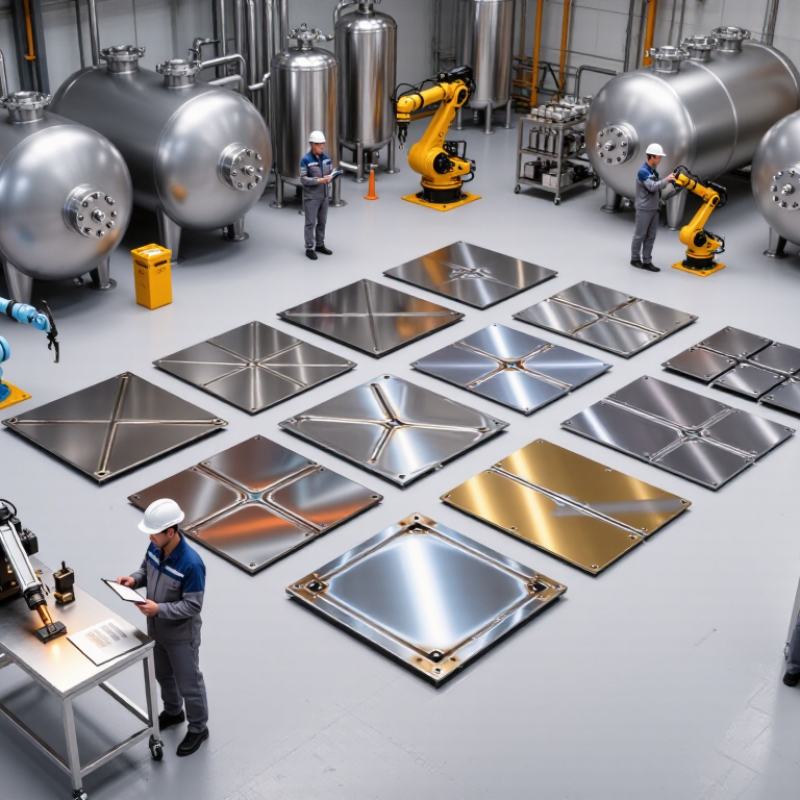
Clad welding joins a corrosion-resistant alloy to a stronger, lower-cost base metal. The result combines surface protection with structural support. Picture a steel pressure vessel with a nickel-alloy lining inside. It can resist chemicals while handling high operating pressure. This approach often reduces material costs and extends service life. It is widely used in energy, chemical processing, marine, and mining equipment.
For global buyers, manufacturer capability matters more than attractive brochures. Qualified suppliers should explain welding procedures, heat control, filler materials, and dilution limits clearly. Ask for procedure qualification records, welder certifications, material certificates, and inspection reports. Ultrasonic testing can reveal bonding defects beneath a smooth surface. Dimensional checks also matter, especially when a clad plate must fit an existing vessel.
The process is not flawless. Excessive heat may weaken the overlay or create distortion. Poor surface preparation can leave hidden lack of fusion. Experienced manufacturers therefore control interpass temperature and document every production stage. Buyers should also confirm packing methods, traceability, delivery terms, and support after installation. A low quotation may conceal testing gaps or expensive repair work. That deserves a second look. Reliable selection depends on verifiable evidence, realistic operating data, and communication across languages, time zones, and technical teams.
10 Best Clad Welding Manufacturers for Global Buyers
How to Evaluate Clad Welding Manufacturers Worldwide
Choosing a clad welding manufacturer requires more than comparing prices. Review its experience with your base metal, overlay alloy, component size, and service conditions. A supplier experienced with pressure vessels may not understand severe erosion in mining equipment. Ask for documented welding procedures, procedure qualification records, welder qualifications, and recent inspection reports. Details matter. Look for control of dilution, heat input, interpass temperature, and overlay thickness. These factors influence corrosion resistance and service life.
Request traceability from incoming material to final inspection. Reliable manufacturers should explain their non-destructive testing methods, including ultrasonic, dye penetrant, or radiographic inspection when appropriate. Check whether reports identify acceptance criteria and calibrated equipment. International buyers should also assess communication, packaging, export experience, and response times. A technically strong supplier can still create delays if drawings and inspection requirements are misunderstood. I have learned that polished presentations prove little without consistent production evidence. No supplier is flawless.
Tips: Compare at least three qualified manufacturers. Send the same drawings and service data to each one. Ask for sample reports, not promises. If possible, inspect a workshop or arrange a live video audit. Discuss repair procedures before production begins. Confirm how deviations are recorded and approved. A small trial panel can reveal cracking, poor fusion, or uneven overlay distribution before a costly order. Sometimes, buyers focus too heavily on certificates and overlook practical workmanship. That mistake is easy to make.
Anonymous benchmark of manufacturer capabilities and buyer-evaluation factors for corrosion-resistant, wear-resistant, and dimensional restoration clad welding projects.
| Rank | Anonymous Manufacturer Profile | Primary Clad Welding Processes | Typical Cladding Materials | Common Component Size Capability | Typical Applications | Quality Documentation Expected | International Buyer Support | Key Evaluation Advantage | Overall Evaluation Score |
|---|---|---|---|---|---|---|---|---|---|
| 1 | Profile A — Heavy-Industry Specialist | SAW ESW Strip Cladding | Nickel alloys, stainless steels, cobalt alloys, carbon-steel restoration materials | Large pressure-vessel parts, rolls, shafts, and process equipment | Oil and gas, petrochemical, power generation, mining | WPS/PQR, welder qualifications, PMI, dimensional reports, NDE records | Export packing, technical drawings in metric and imperial units, remote inspection support | Strong control of heat input, dilution, overlay thickness, and large-part distortion | 9.4/10 |
| 2 | Profile B — Robotic Production Specialist | GMAW GTAW Robotic Cladding | Stainless steel, nickel-based alloys, iron-based hardfacing alloys | Small to medium components with repeatable geometries | Valves, pump parts, hydraulic components, industrial tooling | In-process monitoring, weld maps, NDE reports, coating-thickness records | Stable batch production, digital approval drawings, repeat-order support | High repeatability and competitive unit cost for recurring production volumes | 9.2/10 |
| 3 | Profile C — Nickel-Alloy Corrosion Specialist | GTAW GMAW Laser Cladding | Nickel-chromium alloys, nickel-copper alloys, duplex and super-duplex stainless steels | Precision parts, sealing surfaces, flanges, and internal bores | Chemical processing, desalination, offshore, marine systems | PMI, ferrite testing where applicable, PT/MT/UT, corrosion-test documentation | Material traceability, multilingual technical communication, pre-shipment inspection | Suitable for severe corrosion environments and low-dilution overlays | 9.1/10 |
| 4 | Profile D — Wear-Protection Specialist | FCAW GMAW Thermal Spray | Chromium carbide, tungsten carbide, martensitic alloys, nickel-based hardfacing materials | Chutes, rollers, crusher parts, augers, and replaceable wear surfaces | Cement, steel, aggregate processing, coal handling, recycling | Hardness testing, macro sections, coating-thickness reports, wear-test data when specified | Replacement-part identification and lifecycle-cost recommendations | Good balance between abrasion resistance, impact resistance, and repairability | 8.9/10 |
| 5 | Profile E — Pressure-Equipment Overlay Specialist | SAW Strip Cladding GTAW | Austenitic stainless steels, nickel alloys, corrosion-resistant weld overlays | Vessel shells, heads, tubesheets, nozzles, and large fabricated assemblies | Refining, fertilizer, chemical, nuclear-support, and power equipment | Code-based welding procedures, NDE plans, heat-treatment records, material certificates | Support for ASME-oriented documentation and third-party inspection coordination | Strong fit for code-controlled projects requiring complete manufacturing records | 8.8/10 |
| 6 | Profile F — Repair and Remanufacturing Specialist | GTAW GMAW FCAW | Stainless steel, low-alloy steel, nickel alloys, and compatible repair consumables | Used shafts, housings, valve bodies, turbine parts, and irregular components | Power plants, marine repair, industrial maintenance, transportation equipment | Incoming inspection, repair procedure, dimensional restoration report, final NDE | Reverse-engineering assistance and repair feasibility assessment from photographs or drawings | Reduces replacement cost when the base component remains serviceable | 8.7/10 |
| 7 | Profile G — Laser Cladding Precision Specialist | Laser Cladding DED CNC Finishing | Nickel alloys, cobalt alloys, stainless steels, tool steels, carbide-reinforced powders | Precision bores, edges, sealing lands, turbine-related parts, and complex profiles | Aerospace supply chains, tooling, energy, medical and precision engineering | Powder batch traceability, metallography, dimensional inspection, surface-finish reports | High-resolution scanning, CAD-based repair planning, small-batch prototyping | Low heat input and accurate deposition for geometrically demanding repairs | 8.6/10 |
| 8 | Profile H — Offshore and Marine Specialist | GTAW GMAW SAW | Duplex stainless steels, super-duplex alloys, nickel alloys, stainless overlays | Valves, pumps, shafts, manifolds, pipe fittings, and marine hardware | Offshore platforms, shipbuilding, subsea equipment, seawater systems | PMI, ferrite measurement, impact testing when required, NDE and traceability records | Corrosion-service recommendations, export crating, and inspection-hold-point support | Experience with chloride-bearing environments and corrosion-sensitive materials | 8.5/10 |
| 9 | Profile I — Pipe, Valve, and Fitting Specialist | GTAW GMAW Bore Cladding | Stainless steel, nickel alloys, cobalt alloys, and erosion-resistant overlays | Internal bores, valve seats, pipe ends, flanges, and compact pressure parts | Pipeline, gas processing, water treatment, chemical and process industries | Bore-dimension records, PT/UT, PMI, weld maps, pressure-test documentation where applicable | Support for custom bore dimensions, small and medium production batches | Effective for protecting internal surfaces that are difficult to access or machine | 8.4/10 |
| 10 | Profile J — Cost-Focused Contract Manufacturer | FCAW GMAW SAW | Carbon-steel-compatible hardfacing alloys, stainless steels, nickel-based materials | General industrial parts, wear plates, shafts, rollers, and fabricated assemblies | General manufacturing, material handling, construction equipment, agriculture | Basic WPS, dimensional inspection, hardness testing, visual inspection, NDE on request | Flexible minimum order quantities and practical support for standard export shipments | Competitive pricing for clearly specified projects with moderate technical complexity | 8.1/10 |
Ten Leading Clad Welding Manufacturers and Their Core Capabilities
Global buyers often compare ten leading clad welding manufacturers by process control, material knowledge, and documented performance. The strongest suppliers usually specialize in demanding industrial applications rather than every possible project. One manufacturer may focus on pressure-vessel overlays, while another serves pipelines exposed to sour service. Other capable groups concentrate on corrosion-resistant nickel alloys, stainless steel cladding, or wear-resistant plates for mining equipment. Robotic welding specialists can improve bead consistency on large surfaces. Repair-focused manufacturers handle worn shafts, valves, and heat exchanger components. Some suppliers excel in explosive bonding, while others use laser, plasma, or submerged arc welding. Testing-centered manufacturers add ultrasonic inspection, dye penetrant testing, and metallographic analysis.
Practical evaluation requires more than reading a capability sheet. Buyers should request procedure qualifications, welder certifications, material traceability, and recent inspection records. Ask how the supplier controls dilution between the base metal and overlay. Small details matter, such as preheating logs and the final surface finish. An experienced manufacturer should explain alloy selection in plain technical language. It should also identify limitations before signing a contract. No supplier is perfect. Even a strong workshop may struggle with unusual geometry, urgent delivery, or thin-wall distortion. Factory visits can reveal fitting accuracy, cleanliness, calibration habits, and actual production discipline. Sample weld sections and independent testing may provide more reliable evidence than polished marketing claims.
10 Best Clad Welding Manufacturers for Global Buyers
Clad welding quality depends on method, material control, and documented procedure approval. World Steel Association data recorded about 1.89 billion tonnes of crude steel production in 2023. This scale increases demand for corrosion-resistant overlays in energy, chemical processing, marine, and heavy equipment sectors. Submerged arc welding suits large, straight surfaces and high deposition rates. Gas tungsten arc welding offers cleaner control for narrow or complex areas. Laser cladding can reduce heat input, but equipment costs and operator skill remain significant concerns.
Common overlay materials include stainless steel, nickel alloys, cobalt alloys, and tungsten carbide composites. The correct choice depends on temperature, abrasion, chloride exposure, and service pressure. Grand View Research’s 2024 welding market analysis projects continued market expansion through 2030, supporting investment in automated deposition and inspection. However, growth figures do not guarantee supplier reliability. Buyers should review ISO 3834 quality systems, ISO 15614 procedure qualifications, and ASME Section IX records where applicable. For sour-service equipment, ISO 15156 compliance may also matter.
Tips: Request macro sections, dilution measurements, hardness maps, and repair records. Check whether certificates cover the exact alloy combination, not merely the factory. A polished sample can mislead. Ask for production evidence from similar industries. In my experience, small documentation gaps often signal larger process weaknesses. That deserves scrutiny. A manufacturer may claim low dilution, yet provide no measured percentage. Treat that as an unresolved technical risk.
Selecting the right clad welding partner requires more than comparing a global manufacturer list. Start with your operating conditions, including temperature, pressure, fluid chemistry, and expected service life. A capable supplier should recommend suitable filler metals, control dilution, and explain how the overlay will bond with the base metal. Ask for welding procedure specifications, qualification records, and inspection plans. Useful tests may include ultrasonic testing, dye penetrant testing, hardness checks, and metallographic examination.
Ask for evidence.
Review traceability from raw plate to finished component. Material certificates, welder qualifications, heat numbers, and inspection reports should be easy to verify. Site experience also matters. Request examples involving similar alloys, thicknesses, geometries, and repair constraints. A supplier that understands field installation can identify risks before production begins. Check whether the manufacturer can support design reviews, sample trials, dimensional control, and post-weld machining. Clear communication about lead times and nonconformity handling is equally important.
A low quotation can hide costly rework. I have seen specifications appear complete while omitting edge preparation and acceptance limits. That gap deserves attention. Invite shortlisted manufacturers to review the drawing and challenge unclear requirements. Their questions can reveal practical expertise. Certifications are helpful, but they do not replace recent project references, transparent quality records, and dependable technical communication. Measure twice. Then judge the partner by repeatable evidence, not polished promises.
Clad welding bonds a corrosion-resistant alloy to a stronger base metal. It combines surface protection with structural support. Think of a steel vessel with an alloy lining inside.
It can reduce material costs and extend equipment service life. The method suits energy, chemical processing, marine, and mining equipment. Savings are possible, but not guaranteed.
Request welding procedure qualifications, welder certifications, material certificates, and inspection reports. Ask for production records and traceability documents. Missing paperwork deserves attention.
Ultrasonic testing can detect defects beneath a smooth welded surface. Dye penetrant testing may reveal surface cracks. Independent testing can provide stronger evidence than attractive brochures.
Excessive heat may weaken the overlay or distort the component. Poor surface preparation can cause hidden lack of fusion. Heat control matters.
Compare process control, alloy knowledge, inspection ability, and documented performance. Ask about dilution limits, preheating, interpass temperature, and surface finish. A capability sheet is only a starting point.
No supplier is perfect. Some workshops may struggle with thin walls, complex geometry, or urgent delivery. Sample weld sections and a factory visit can reveal practical limitations.
Confirm dimensions, packing methods, delivery terms, and post-installation support. Dimensional checks are important when cladding must fit an existing vessel. A low quotation may hide testing gaps or later repair costs.
Clad Welding is a specialized surface-engineering process that bonds a protective alloy layer to a base metal, helping improve resistance to corrosion, erosion, heat, and wear. This article explains why global buyers use clad components in demanding industries such as energy, chemical processing, construction, mining, and heavy manufacturing. It also presents practical criteria for evaluating manufacturers worldwide, including production capacity, welding expertise, quality control, material compatibility, testing procedures, delivery performance, and technical support.
The guide introduces ten leading types of Clad Welding manufacturers and summarizes their core capabilities without focusing on brand names. It compares common welding methods, material combinations, relevant certifications, and industry applications to help buyers understand technical and commercial differences. Finally, it offers a structured approach for selecting the right partner by matching project requirements, operating conditions, budget, compliance expectations, customization needs, and long-term service capabilities.
