
How to Choose Automated Cladding in 2026?

Time:2026-09-19 Author:Madeline
0%

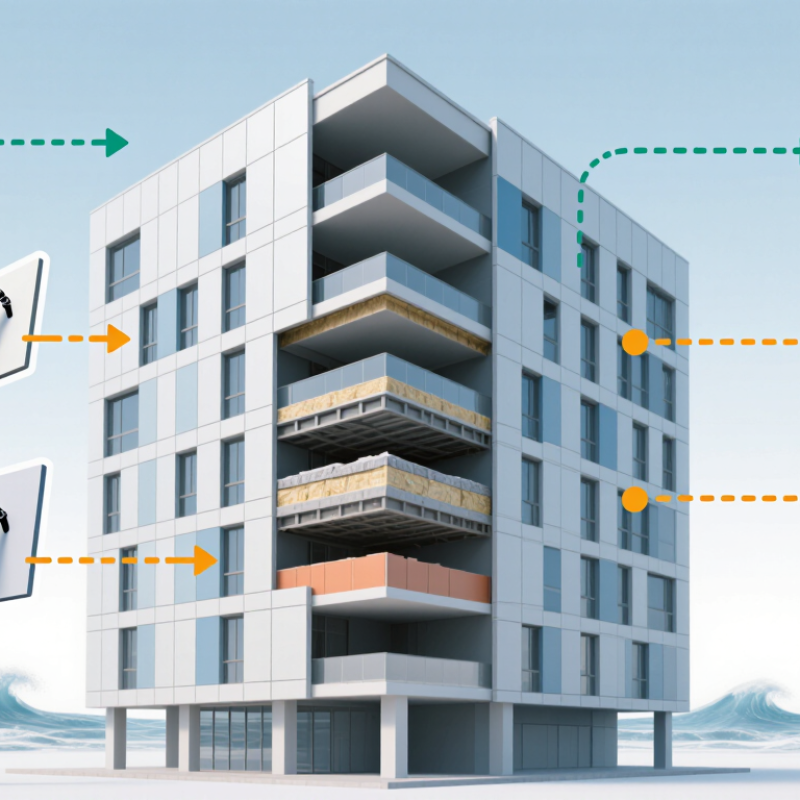
Choosing Automated Cladding in 2026 requires more than comparing machines, software, and installation speed. A façade may look precise in a showroom, yet perform poorly on a windy coastal site. The right decision connects automation with weather exposure, material behavior, labor skills, maintenance, and project scale.

Dr. Thomas Auer, a recognized building-technology specialist, describes the façade as “a building’s environmental interface, not merely its outer skin.” This principle matters when evaluating Automated Cladding systems. An automated line must place panels accurately, but it must also support drainage gaps, thermal movement, fire-safe detailing, and future repairs. Precision alone is not enough.

Start with the building’s real conditions. Measure panel weight, joint tolerance, substrate variation, access limitations, and installation height. Then examine robotic reach, sensor reliability, programming requirements, operator training, and service availability. Ask who will repair the system after five years. That question is often ignored.

The cheapest equipment can become expensive when software updates stop or replacement parts arrive slowly. Conversely, a highly advanced system may be unnecessary for small, irregular projects. Some contractors also underestimate commissioning time. That mistake feels small at first.

A reliable selection process should include site trials, sample assemblies, safety reviews, and documented performance checks. Request evidence from comparable projects, not polished promises. The best Automated Cladding solution may not be the fastest one. It should deliver repeatable quality, practical control, and measurable value throughout the building’s life.
How to Choose Automated Cladding in 2026?

Understanding Automated Cladding Systems and Their 2026 Applications

Automated cladding systems combine robotic handling, digital measurement, cutting, fastening, and inspection.

In 2026, their strongest applications include rainscreen façades, insulated panels, modular construction, and solar-integrated envelopes. A robot may position a heavy panel while machine vision checks alignment within millimetres. Measure the surface first.

The International Federation of Robotics reported 541,302 industrial robot installations worldwide in 2023. This shows expanding automation capacity, but it does not guarantee a suitable cladding solution.

Selection should begin with panel weight, dimensions, joint tolerance, substrate condition, and daily production volume. Payload capacity matters. So does reach.

Digital compatibility is equally important.

Systems should accept BIM data, record installation results, and communicate with surveying equipment. The 2024 Global Status Report for Buildings and Construction identifies buildings as responsible for about 30% of global energy demand. Better cladding installation can reduce thermal gaps, moisture risks, and rework, although automation alone cannot improve a poorly designed envelope. That point is often overlooked.

Check dust protection, weather resistance, emergency controls, operator training, and maintenance access.

ISO 10218 provides a useful reference for industrial robot safety, while local construction requirements still apply. Request measured cycle times, tolerance data, and service response commitments. A polished demonstration can hide difficult site conditions. Pilot one façade zone before scaling. Mistakes become expensive when software, panels, and structural tolerances disagree.

Assessing Building Requirements, Materials, and Production Goals

How to Choose Automated Cladding in 2026?

Start with the building. An automated cladding system should respond to wall height, wind exposure, moisture, fire performance, and access conditions. A coastal façade may need stronger corrosion resistance than an inland warehouse. A hospital requires tighter hygiene and maintenance controls than a storage facility. Review local building codes with qualified engineers before selecting equipment or materials.

Material choice changes the entire production plan. Aluminum offers low weight and precise forming, while steel provides strength but demands careful handling. Fiber cement can create a textured finish, yet its dust and edge-fracture risks require suitable extraction and tooling. Consider panel thickness, thermal movement, surface coating, and acceptable dimensional variation. Measure twice. A small tolerance error can spread across an entire elevation.

Production goals must remain practical.

High output means little if the line creates excessive scrap or frequent stoppages. Check loading time, tool changes, inspection points, software compatibility, and operator training. For mixed project sizes, flexible automation may outperform a faster fixed process. I have seen teams prioritize speed and later struggle with awkward panels and costly rework. That matters. Request documented test results, maintenance schedules, safety controls, and sample runs using the intended material. Independent verification is valuable, but it cannot replace a trial under real production conditions. Some decisions will still be imperfect; record the assumptions and revisit them when building data changes.

Comparing Cladding Automation Technologies and Equipment Options

How to Choose Automated Cladding in 2026?

Comparing cladding automation technologies and equipment options starts with the repair goal. Robotic arc cladding suits large shafts, valves, and heavy wear surfaces. It offers strong deposition rates and relatively moderate equipment costs. However, heat input can create distortion, especially on thin sections. Laser cladding produces a narrow heat-affected zone and precise overlays. It fits high-value parts requiring tight dimensional control, but powder handling and optical alignment demand greater discipline. Thermal spray systems work quickly on broad surfaces, although bond strength and surface preparation need careful verification.

Equipment selection should follow measurable production conditions. Check part diameter, alloy type, access angles, layer thickness, and expected hourly output. A six-axis robot improves reach, while positioners keep the weld pool stable around curved parts. Closed-loop wire or powder feeders help maintain deposition consistency. Vision sensors can detect joint shifts, but they do not replace skilled inspection. Include fume extraction, interlocks, calibration tools, and accessible maintenance points in the equipment review.

Real shop experience often challenges the brochure. An early trial may show excellent bead appearance but poor hardness uniformity near the start point. That result deserves investigation, not a quick purchase. Request sample cladding, cross-section analysis, hardness mapping, and adhesion testing before approval. Record parameters digitally, train operators, and compare results across several batches. The best choice is not always the fastest machine. It is the system that repeatedly produces qualified surfaces with traceable evidence and manageable downtime.

Evaluating Safety, Compliance, Integration, and Operating Costs

Choosing automated cladding in 2026 requires more than checking installation speed. Safety should be measurable at the workface. The U.S. Bureau of Labor Statistics recorded 1,075 fatal injuries among construction and extraction workers in 2023. Automated systems can reduce repetitive lifting and elevated exposure, but only with guarded zones, emergency stops, force limits, and verified operator training. Faster is not automatically safer.

Compliance must follow the project’s location and risk profile. ISO 10218 provides a useful framework for robot safety, while local building, electrical, fire, and machinery rules remain decisive. Fire-rated panels, fixings, control software, and inspection records need traceable documentation. The International Federation of Robotics reported 541,302 industrial robots installed globally in 2023. That figure shows growing automation, not proven suitability for façade work. Conditions differ sharply.

Integration and operating costs deserve closer testing. Survey the building model, panel tolerances, lifting paths, and existing access equipment before procurement. McKinsey Global Institute found construction productivity grew about 1% annually over two decades, far below the wider economy’s 2.8% growth. Automation may improve that gap, yet software updates, calibration, spare parts, and technician response can erode savings. A pilot installation can reveal hidden rework and downtime. It may also expose an uncomfortable truth: a technically impressive system can be uneconomic when site variation is high. Cost models should include labor, energy, maintenance, training, compliance audits, and production interruptions. The cheapest quotation rarely represents the lowest operating cost.

Planning System Selection, Installation, and Long-Term Maintenance

How to Choose Automated Cladding in 2026?

Planning System Selection, Installation, and Long-Term Maintenance

Choosing automated cladding starts with the building, not the control panel. Study sun exposure, wind loads, moisture levels, and façade movement. A system should support energy goals without creating difficult maintenance demands. Request verified performance data, installation records, and clear warranty conditions. Independent engineering review is valuable, especially for complex façades. Do not rely on attractive renderings alone.

Installation planning needs practical detail. Confirm structural anchors, drainage paths, electrical access, and emergency operation before work begins. Coordinate façade engineers, electricians, and safety inspectors early. A small alignment error can produce noise, friction, or uneven movement. One common mistake is leaving service access until the end. That choice becomes expensive. During commissioning, test sensors in bright sun, heavy rain, and cold conditions. Real weather exposes weaknesses that factory tests may miss. Systems also need documented handover procedures and trained site staff.

Tips: Create a maintenance calendar before purchasing. Inspect moving joints, seals, sensors, and fasteners at fixed intervals. Keep replacement parts identifiable and stored in dry conditions. Review performance data each season. If automation responds too often, adjust the control logic carefully. Less movement may improve durability, but it can reduce comfort. That trade-off deserves honest review. Never assume “automatic” means maintenance-free.

How to Choose Automated Cladding in 2026?

Planning System Selection, Installation, and Long-Term Maintenance

This planning model allocates a 100-point evaluation score across the practical factors that influence an automated cladding project. Building-envelope performance and installation coordination receive the highest weighting, while controls integration and long-term maintenance help reduce operational risk over the system life cycle. Final weights should be adjusted to suit the building type, climate, fire strategy, access requirements, and local regulations.

FAQS

What building conditions should guide automated cladding selection?

Check wall height, wind exposure, moisture, fire performance, and service access. Coastal buildings may need stronger corrosion resistance. Start with the façade.

How do materials affect the production process?

Aluminum is light and precise. Steel is stronger but needs careful handling. Fiber cement offers texture, yet creates dust and fragile edges.

What production targets should be reviewed before purchase?

Review loading time, tool changes, inspection points, software compatibility, and training needs. High speed means little if stoppages create excessive scrap.

How can safety be assessed on the worksite?

Look for guarded zones, emergency stops, force limits, and verified operator training. Reduced lifting does not automatically mean reduced risk. Faster is not always safer.

What documents should a supplier provide?

Request test results, maintenance schedules, safety controls, warranty terms, and sample-run records. The documents should match your intended material and project conditions.

How should automation integrate with an existing building process?

Survey digital models, panel tolerances, lifting paths, anchors, drainage, and electrical access. Small alignment errors can cause friction, noise, or uneven movement.

What costs are often missed in automated cladding projects?

Include energy, calibration, software updates, spare parts, training, audits, maintenance, and downtime. A cheap quotation may become expensive during operation.

Why is pilot testing important before full installation?

A pilot can reveal hidden rework, awkward panels, and site variation. Test sensors in bright sun, heavy rain, and cold conditions. Factory tests may miss weaknesses.

How should long-term maintenance be planned?

Create a calendar for joints, seals, sensors, and fasteners. Store replacement parts in dry, clearly marked locations. Automatic does not mean maintenance-free.

What should teams do when their original decision seems wrong?

Record the assumptions behind the selection and review them as building data changes. Some decisions will remain imperfect. That is worth admitting.

Conclusion

Choosing Automated Cladding in 2026 requires a clear understanding of how automated systems support modern building projects, from panel handling and cutting to positioning, fastening, and quality control. The right solution should match the building’s design, project scale, material types, production volume, and desired level of flexibility. Important considerations include whether the system can process different cladding materials efficiently while maintaining accuracy, consistency, and a reliable workflow.

A successful selection also depends on comparing automation technologies, equipment capabilities, safety features, regulatory compliance, software integration, energy use, labor requirements, and total operating costs. Businesses should evaluate installation conditions, staff training, maintenance access, upgrade potential, and long-term technical support before making a decision. By connecting system performance with practical production goals and future expansion plans, companies can choose an Automated Cladding solution that improves productivity, supports consistent quality, and delivers sustainable value throughout its service life.

Madeline

Madeline

Madeline is a dedicated marketing professional with a wealth of expertise in our company's core offerings. With a keen understanding of the industry, she brings a unique perspective to her role, consistently delivering high-quality content that highlights the superior aspects of our products. As......