
Choosing among China’s best Plasma Arc Spraying manufacturers and suppliers requires more than comparing prices. It requires technical judgment, application knowledge, and evidence from real production environments.
Plasma Arc Spraying uses a high-temperature plasma jet to melt coating powders and propel them onto prepared surfaces. Coating quality depends on powder chemistry, torch stability, spray distance, substrate preparation, and operator experience. A reliable supplier should explain these variables clearly. They should also provide coating thickness records, porosity measurements, bond-strength results, and surface-finish data. Details matter. A small change in argon flow can affect the final coating.
This guide examines Chinese manufacturers and suppliers serving industrial repair, aerospace components, energy equipment, automotive parts, and wear-resistant machinery. It considers production capability, equipment condition, quality-control procedures, engineering support, delivery performance, and communication. Factory audits, sample testing, and traceable inspection reports can reveal more than polished brochures. Relevant certifications should be verified directly and matched with the required market standards.
Some suppliers offer broad coating catalogs but limited application guidance. That weakness should not be ignored. The strongest partners usually recommend suitable powders, explain limitations, and adjust parameters after testing. No supplier is perfect. Even experienced teams may need additional trials for complex geometries or sensitive substrates. Buyers should therefore request reference projects, coating samples, process records, and realistic performance expectations before placing an order. This practical approach helps identify dependable Plasma Arc Spraying partners for long-term industrial needs.
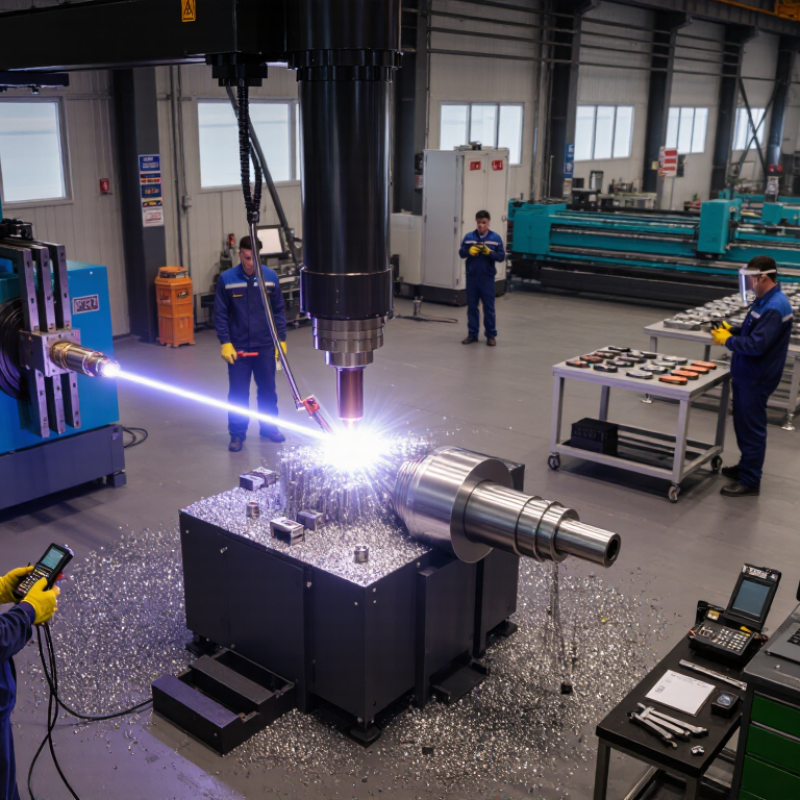
Plasma arc spraying uses an electric arc to ionize gas into a high-energy plasma jet. The core stream can reach approximately 10,000–20,000 K, depending on gas chemistry and operating power. This heat melts metallic, ceramic, or cermet feedstock before impact. The particles flatten into lamellae on the prepared surface. Typical coatings measure 50–500 μm, as reported in ASM Handbook, Volume 5A. Thickness depends on wear demand, substrate temperature, and required dimensional tolerance.
Industry data supports continued demand for this process. The MarketsandMarkets Thermal Spray Coatings report estimated the global market at more than USD 10 billion in recent editions. Yet temperature alone does not guarantee coating quality. Gas flow, powder size, spray distance, and cooling control affect porosity and adhesion. In practical production, a polished cross-section may look excellent, but hidden oxidation can remain. That is an important limitation. Reliable Chinese manufacturers and suppliers should provide parameter records, substrate preparation details, bond-strength testing, and thickness mapping.
Tips: Confirm the requested 50–500 μm range before spraying. Measure surface roughness after grit blasting. Keep the substrate cool between passes. Ask for traceable inspection records, not only photographs. A simple trial panel often reveals more than a confident specification.
China’s plasma spraying industry serves demanding applications in aerospace, energy, medical equipment, and industrial machinery. Manufacturers typically work with ceramic, metallic, and carbide powders. Alumina, zirconia, nickel alloys, and tungsten carbide are common choices. Each material reacts differently to heat, impact, and humidity.
Modern plasma spraying systems control arc current, gas flow, powder feed, and spray distance. Skilled operators inspect the coating surface, measure thickness, and check bonding strength.
A typical process may create a coating between 100 and 500 micrometers. However, laboratory results do not always match factory conditions. Powder storage, nozzle wear, and operator judgment can change the final performance. This is where practical experience matters.
Tips: Ask suppliers for material certificates, process records, and test data. Confirm whether they can handle small batches and complex geometries. Check surface preparation standards before comparing prices. A reliable service team should explain inspection limits clearly, not promise perfect results. Site trials are useful. They reveal problems hidden by polished samples. China’s stronger suppliers often combine equipment manufacturing, coating development, machining, and after-sales support, allowing customers to adjust parameters with fewer delays.
China’s leading plasma arc spraying manufacturers and suppliers should be compared by measured performance, not catalog promises. Deposition efficiency commonly ranges from 30% to 80%, depending on powder size, spray distance, gas flow, and operator control. A higher figure can reduce material waste, but it may also hide uneven coating thickness. Practical buyers should request test records from the same alloy, substrate, and spray conditions.
Porosity below 5% is a useful target for wear and corrosion protection. However, one polished cross-section cannot prove long-term reliability. Trusted manufacturers should provide microscopic analysis, thickness mapping, bond-strength results, and repeatability data from multiple samples. Ask whether independent laboratories verified the results. Small differences matter. A coating near 2% porosity may perform differently from one near 4.8%, especially under thermal cycling. In my view, supplier comparisons often look too neat; real production includes variation, rework, and occasional unstable arcs.
Tips: Request a sample coating before placing a large order. Check deposition efficiency, porosity, hardness, and adhesion together. Confirm powder traceability and calibration records. Also ask how technicians handle warped substrates or blocked spray nozzles. These details reveal practical experience better than impressive percentages. A reliable supplier explains limits clearly and accepts that results may change between laboratory trials and factory production.
| Reference Supplier Profile | Typical Plasma Spray Capability | Common Powder Materials | Deposition Efficiency | Typical Coating Porosity | Typical Bond Strength | Recommended Coating Thickness | Typical Applications | Quality-Control Evidence to Request |
|---|---|---|---|---|---|---|---|---|
| Profile 1 — Ceramic Coating Specialist | Atmospheric plasma spraying with controlled plasma gas flow and robotic torch movement | Alumina, alumina-titania, chromium oxide, yttria-stabilized zirconia | 30–45% | 2–5% | 20–35 MPa | 100–500 μm | Electrical insulation, wear resistance, thermal protection, medical and textile components | Porosity measurement, microstructure cross-sections, phase analysis, thickness mapping and adhesion testing |
| Profile 2 — Thermal Barrier Coating Specialist | Atmospheric plasma spraying optimized for multilayer thermal barrier systems | Metallic bond coats with zirconia-based ceramic top coats | 35–55% | <5% | 25–45 MPa | 150–600 μm | Gas-turbine components, combustion hardware, heat shields and high-temperature fixtures | Coating thickness uniformity, thermal-cycling results, bond-coat oxidation checks and metallographic inspection |
| Profile 3 — Metallic Wear-Coating Specialist | Atmospheric plasma spraying for dense metallic and cermet coatings | Stainless steel, nickel alloys, cobalt alloys, nickel-chromium and metal-ceramic powders | 50–70% | 1–4% | 35–60 MPa | 200–1,000 μm | Corrosion protection, dimensional restoration, sliding wear and erosion control | Powder certification, hardness testing, surface roughness, adhesion testing and coating-thickness records |
| Profile 4 — High-Throughput Production Specialist | Robot-integrated plasma spray cells with automated powder feeding and process monitoring | Nickel-based alloys, stainless steel, aluminum alloys and selected ceramic powders | 60–80% | 2–5% | 40–65 MPa | 150–800 μm | Large-volume industrial parts, pumps, valves, rollers and general machinery components | Process parameter logs, torch calibration, powder feed-rate verification, batch traceability and statistical thickness control |
| Profile 5 — Precision Repair and Refurbishment Specialist | Low-distortion plasma spraying with localized masking and post-spray machining | Nickel alloys, cobalt alloys, stainless steel and selected oxide ceramics | 45–65% | 2–4% | 30–55 MPa | 100–700 μm | Repair of worn shafts, sealing surfaces, bearing seats, tooling and aerospace-support equipment | Dimensional inspection, runout measurement, adhesion testing, non-destructive inspection and final surface-finish records |
| Profile 6 — Corrosion and Chemical-Service Specialist | Plasma spray systems configured for corrosion-resistant metallic and ceramic barrier coatings | Nickel-chromium alloys, stainless steel, alumina, chromium oxide and ceramic composites | 40–65% | 1–4% | 30–60 MPa | 200–900 μm | Chemical processing, oil and gas equipment, marine hardware, pumps and fluid-handling systems | Salt-spray or immersion testing where applicable, porosity testing, cross-section analysis and chemical-composition verification |
Note: The figures are representative engineering benchmark ranges for atmospheric plasma-sprayed coatings, not claims for any specific company or brand. Actual deposition efficiency, porosity and bond strength depend on powder morphology, particle size, spray distance, plasma gases, substrate preparation, torch settings and post-treatment. Values should be confirmed through supplier qualification samples and test reports.
China Best Plasma Arc Spraying Manufacturers and Suppliers
Reliable Chinese plasma arc spraying suppliers control every stage, from powder storage to final inspection. Operators should record gas flow, arc current, voltage, spray distance, and substrate temperature. These values directly affect coating density, bond strength, and surface finish. Process sheets must match actual production, not only approved samples. Traceable batch numbers help connect each coating to its powder lot, equipment, and operator.
Testing should reflect the component’s working conditions. Common checks include coating thickness, hardness, porosity, adhesion strength, surface roughness, and metallographic structure. Qualified laboratories may use calibrated instruments and documented test methods, such as ASTM or ISO procedures. Salt spray, thermal cycling, or wear tests may be necessary for demanding applications. A polished report is not enough. Buyers should review raw data, sampling frequency, and equipment calibration records.
Certifications can support supplier credibility, but they do not replace technical verification. ISO 9001 indicates a structured quality management system, while environmental and occupational certifications may show broader operational control. Buyers should confirm certificate scope, issuing body, validity, and covered production site. Factory audits should examine rejected parts, corrective actions, and operator training records. Some suppliers still rely too heavily on visual inspection. That weakness deserves attention. A small variation in powder feed or spray distance can create a coating failure weeks later.
Selecting a China-based plasma arc spraying manufacturer should begin with your coating problem, not a supplier list. Ask whether its engineers understand your substrate, service temperature, wear pattern, and dimensional limits. A steel shaft, ceramic seal, and turbine component need different preparation and powder strategies. Request process records for comparable work. Real experience appears in details: grit size, preheating temperature, spray distance, current, gas flow, and machining allowance. Brochures rarely show these details.
Evaluate equipment and process control directly. Confirm torch maintenance routines, powder batch traceability, coating thickness monitoring, and bond-strength testing. Ask for sample coupons made from your actual material. Measure hardness, porosity, roughness, and adhesion through an agreed test plan. A capable supplier should explain acceptance limits clearly. It should also identify risks before production, including masking failure, overheating, or coating distortion. Do not accept impressive numbers without test methods. That is a common mistake.
Communication matters as much as spraying skill. Review technical drawings together and check how changes are documented. Ask about inspection reports, nonconformance handling, packaging, and realistic lead times. A factory visit can reveal clean powder storage, organized workstations, and calibrated instruments. Remote audits are useful, but incomplete. Request production photos and signed test records when travel is difficult. My own preference is a small pilot order before repeated production. It may slow purchasing, but it exposes weak process discipline early.
An electric arc ionizes gas and creates a high-energy plasma jet. The jet melts metallic, ceramic, or cermet powder. Molten particles flatten into thin lamellae on a prepared surface.
The plasma core may reach about 10,000–20,000 K. Gas chemistry and operating power affect this range. Temperature alone does not guarantee a reliable coating.
Typical coatings measure about 50–500 μm. The required thickness depends on wear, substrate temperature, and dimensional tolerance. Confirm the target range before spraying.
Gas flow, powder size, spray distance, and cooling control are important. Poor control can increase porosity or weaken adhesion. Keep the substrate cool between passes.
Review experience with the same substrate and service conditions. Ask for grit size, preheating temperature, spray distance, current, and gas-flow records. Brochures are not enough.
Request thickness mapping, hardness, porosity, roughness, and bond-strength testing. Powder batches should be traceable. A photograph is not proof.
A small coupon made from the actual substrate can reveal process weaknesses. It may show overheating, poor adhesion, or coating distortion. This takes time. Still, early evidence is valuable.
Check powder storage, organized work areas, calibrated instruments, and torch maintenance. Review signed inspection reports and nonconformance records. Remote audits help, but they remain incomplete.
Do not accept impressive performance numbers without test methods. A polished cross-section may still hide oxidation. That limitation deserves attention. No checklist is perfect.
Plasma Arc Spraying is a thermal coating process that uses a high-temperature plasma jet, typically reaching 10,000–20,000 K, to melt and propel materials onto a surface. It can produce coatings approximately 50–500 μm thick, helping improve wear resistance, corrosion protection, thermal performance, and component service life. China’s industry now offers a broad range of coating materials, spraying equipment, surface preparation methods, and customized engineering services for industrial applications.
When evaluating Chinese manufacturers and suppliers, buyers should compare deposition efficiency, commonly ranging from 30–80%, as well as coating porosity, with high-quality results often targeting below 5%. Important selection criteria include process monitoring, powder and substrate control, adhesion testing, hardness measurement, thickness verification, and documented quality certifications. The best supplier should also demonstrate stable production capability, technical expertise, clear inspection procedures, responsive communication, and experience with the specific material, geometry, operating temperature, and performance requirements of the intended application.
