
Laser Cladding Equipment is becoming a practical investment for manufacturers seeking longer component life, lower material waste, and controlled surface repair. Its applications span aerospace landing gear, mining rollers, oil-field valves, turbine parts, and heavy industrial tooling. Grand View Research estimates steady growth in the global laser cladding market through 2030. MarketsandMarkets also identifies rising demand for repairable, high-value metal components. Their estimates differ, however. Definitions and regional coverage are not always consistent.
The strongest manufacturers combine laser sources, powder feeders, motion systems, process monitoring, and application support. A reliable machine must manage heat input, powder efficiency, coating adhesion, dilution, and repeatability. These details matter more than a polished brochure. Dr. Stewart Williams, a recognised laser-processing researcher at Cranfield University, has stated, “Laser processing is a precise tool, but successful manufacturing still depends on process understanding.” That principle remains highly relevant. Equipment alone cannot correct poor alloy selection or unstable deposition parameters.
This China Top 10 Laser Cladding Equipment Manufacturers overview examines practical capabilities rather than rankings alone. It considers system architecture, laser power, powder delivery, automation, service networks, testing experience, and industry applications. Factory evidence matters. So do transparent specifications and documented results. Some suppliers provide impressive demonstrations but limited long-term data. Buyers should remain cautious. Independent validation, sample trials, coating analysis, and lifecycle calculations can reveal the real value. The market is promising, but not effortless. Reliable growth will depend on engineering discipline, honest performance claims, and equipment designed for actual production conditions.
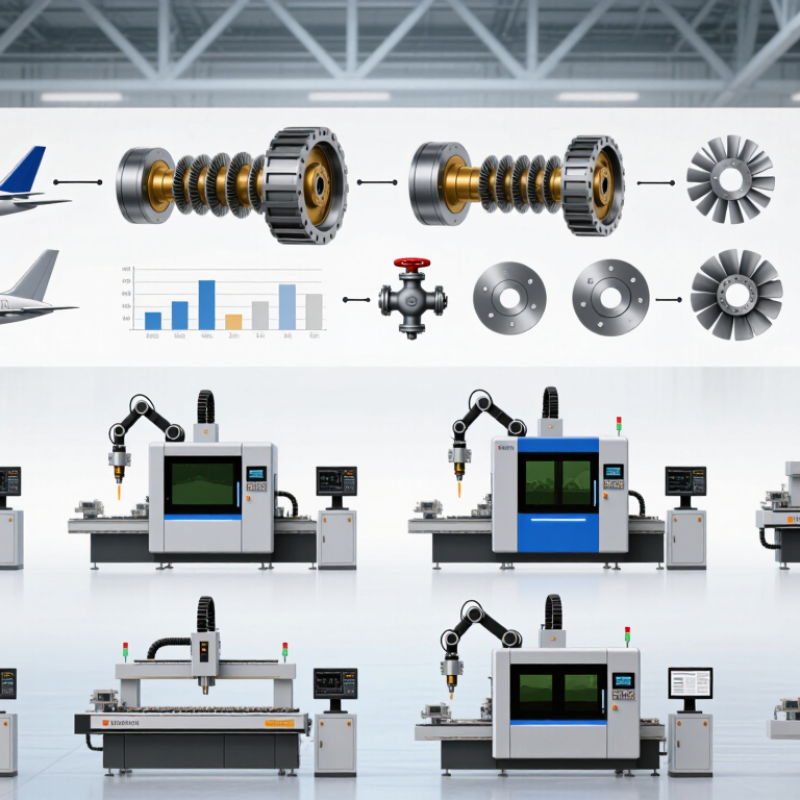
Laser cladding equipment is an integrated system for repairing or improving metal surfaces. It combines a laser source, powder or wire feeder, shielding gas, motion platform, sensors, and control software. The laser melts a small area of the base metal while added material enters the molten pool. After cooling, the new layer forms a strong metallurgical bond. The layer is thin. This process can restore worn shafts, seal damaged edges, and improve resistance to abrasion, heat, or corrosion.
Effective equipment requires stable energy delivery and accurate material feeding. A high-quality powder feeder should maintain a steady flow, even during long repairs. The optical head must keep the beam focused as the workpiece moves. Cooling units also matter, especially during repeated passes. Experienced operators monitor melt-pool brightness, track overlap, and adjust travel speed when the surface changes. Small errors can create pores, uneven height, or excessive dilution.
Selecting equipment from China’s leading manufacturers involves more than comparing laser power. Buyers should examine process records, component service, software control, and operator training. Test samples are essential for checking hardness, bonding, geometry, and heat-affected zones. A setting that works on a flat plate may fail on a curved shaft. That is often overlooked. Post-machining may still be necessary, and powder waste can be higher than expected. The process is efficient, but it is not effortless.
Evaluating China’s top ten laser cladding equipment manufacturers requires more than comparing prices. A reliable review should examine engineering experience, process stability, and documented results. Check whether the manufacturer has completed projects involving similar alloys, component sizes, and repair conditions. Ask for sample reports, coating thickness data, hardness readings, and distortion measurements. Clear records matter more than polished brochures.
Technical capability should include laser control, powder feeding accuracy, motion systems, and thermal monitoring. Inspect how the equipment handles narrow grooves, curved surfaces, and repeated passes. Independent certifications can support credibility, but they should not replace practical testing. Speak with recent users when possible. Their maintenance history may reveal issues that factory demonstrations hide. No scorecard is perfect.
Tips: Request a live trial using your own material and operating parameters. Confirm spare-part availability, operator training, software updates, and response times before signing. Compare five-year ownership costs, not only the purchase price. A quiet powder feeder may matter more than a higher headline power rating. Also, allow room for uncertainty; laboratory results may change under workshop dust, vibration, or inconsistent powder flow.
China’s leading laser cladding manufacturers differ in equipment design, process control, and service depth. The strongest profiles usually combine laser sources, motion systems, powder feeders, and closed-loop monitoring. Their machines support repair, surface strengthening, and controlled material deposition on shafts, rollers, molds, and hydraulic parts. Several manufacturers focus on compact repair cells, while others build large gantry systems for mining or energy components.
The first group emphasizes high-speed cladding and automated powder delivery. Their equipment often includes coaxial nozzles, water cooling, and adjustable beam profiles. Another group develops robot-mounted systems for curved surfaces and difficult access areas. Some manufacturers provide process databases for stainless steel, nickel alloys, and wear-resistant powders. These records matter because laboratory results may not match a dusty workshop.
Strong suppliers also offer sample testing, operator training, installation support, and replacement parts. Experienced buyers should inspect bead width, dilution rate, bonding strength, and heat-affected depth. A practical trial uses the customer’s actual substrate, not a polished demonstration coupon. Ask for maintenance logs and long-term operating references.
One weakness appears repeatedly: software can be powerful but poorly explained. Operators may need clearer alarms, simpler parameter libraries, and better access to process data. The most reliable profiles show transparent testing methods, documented tolerances, and honest limits. Equipment selection still requires site visits, technical interviews, and a careful review of warranty coverage.
Comparing the top 10 laser cladding equipment manufacturers requires more than checking laser power or machine price. MarketsandMarkets estimated the laser cladding market at about USD 0.7 billion in 2023, with strong growth expected through 2028. This expansion reflects demand for repair, wear protection, and material savings. Coaxial powder systems offer flexible deposition and complex geometries. Wire-based systems can reduce material waste, but they may require tighter feeding control. High-speed cladding improves productivity on large cylindrical surfaces. It is not ideal for every repair.
Applications reveal practical differences between suppliers. Mining rollers need thick, impact-resistant layers. Aerospace components require controlled heat input, traceability, and strict inspection records. Energy equipment often needs corrosion-resistant alloys and stable operation across long production cycles. A useful comparison should examine deposition rate, dilution, layer uniformity, thermal distortion, and compatible materials. According to Grand View Research, industrial laser adoption continues to expand because manufacturers seek longer component life and lower replacement costs.
Service quality can decide project success. Strong suppliers usually provide powder analysis, parameter development, metallographic testing, operator training, and remote diagnostics. ISO 14919 supports consistent classification of thermal-spray and related feedstock practices, but it does not replace application-specific validation. Buyers should request sample trials and measurable acceptance criteria. A polished demonstration may hide difficult production details. I would also question rankings based only on installed units; transparent data remains uneven across this industry.
China Top 10 Laser Cladding Equipment Manufacturers
How to Select the Right Chinese Manufacturer
China offers many laser cladding equipment suppliers, but selection should begin with process evidence, not catalogue photographs. Wohlers Report 2024 valued the global additive manufacturing industry at 20.035 billion US dollars in 2023. This figure includes related technologies, not laser cladding alone. Still, it shows strong demand for controlled metal deposition. Ask each manufacturer for coating thickness data, dilution rates, hardness results, and powder utilization under similar conditions.
A reliable supplier should provide factory acceptance testing and traceable calibration records. Check whether its quality system follows ISO 9001 and whether critical components have documented origins. Request a live trial using your actual alloy and substrate. Watch the melt pool, powder feeding, surface finish, and post-machining allowance. A polished demonstration can still mislead. It may hide unstable parameters or excessive operator adjustment.
Service capability matters more than a low quotation. MarketsandMarkets identifies continued growth in the laser cladding equipment market through the current decade, increasing pressure on suppliers to support international users. Confirm installation training, spare-part response times, software updates, and remote diagnostics. Review at least three customer references, preferably from heavy industry or repair applications. No manufacturer scores perfectly. I would record technical strengths and weak points separately, then compare five-year operating costs rather than purchase price alone.
The following comparison uses anonymized supplier profiles. Technical figures represent practical selection benchmarks and commonly specified configurations for Chinese laser cladding equipment; buyers should verify final specifications, certifications, references, and acceptance-test results directly with each supplier.
| Rank | Anonymized Supplier Profile | Typical Laser Power | Cladding Configuration | Typical Working Envelope | Common Materials | Automation Level | Best-Fit Applications | Key Selection Strength | Due-Diligence Priority |
|---|---|---|---|---|---|---|---|---|---|
| 1 | Profile A — Integrated CNC Laser Cladding Builder | 2–6 kW | Coaxial powder + 3–5 axis | Up to approximately 2,000 mm travel | Steel, nickel alloys, cobalt alloys | High | Large shafts, rolls, valves, molds | Turnkey integration and repeatability | Verify axis accuracy, post-processing, and sample results |
| 2 | Profile B — Heavy-Industry Repair System Supplier | 3–12 kW | Powder or wire; robotic option | Large-part cells | Carbon steel, tool steel, nickel alloys | Medium to high | Mining, power generation, oil and gas | Large component capacity | Confirm heat input, distortion control, and extraction system |
| 3 | Profile C — Robotic Laser Deposition Integrator | 1–6 kW | Robot + rotary positioner | Robot-dependent | Stainless steel, nickel alloys, cobalt alloys | High | Complex surfaces and curved components | Flexible motion and multi-axis access | Check robot reach, collision control, and programming support |
| 4 | Profile D — Precision Mold and Tooling Specialist | 500 W–3 kW | Fine powder feeder; CNC or 5-axis | Small to medium parts | Tool steel, stainless steel, nickel alloys | High | Mold repair, die repair, localized reinforcement | Fine deposition and low heat-affected zone | Request metallography, hardness, and dimensional data |
| 5 | Profile E — Rotational Component Cladding Supplier | 2–8 kW | CNC lathe + laser head | Diameter up to approximately 1,000 mm | Steel, stainless steel, nickel alloys | Medium to high | Rollers, hydraulic rods, sleeves, shafts | Consistent circumferential coating | Confirm runout tolerance and rotary synchronization |
| 6 | Profile F — Wire Laser Cladding System Builder | 2–10 kW | Laser wire deposition | Medium to large parts | Steel, nickel alloys, titanium alloys | Medium | High deposition-rate repair and buildup | Material utilization and deposition rate | Evaluate wire compatibility, bead geometry, and feeding stability |
| 7 | Profile G — Portable and On-Site Repair Equipment Supplier | 1–4 kW | Compact powder system | Small to medium components | Carbon steel, stainless steel, tool steel | Medium | Maintenance workshops and field repair | Mobility and lower installation requirements | Check enclosure, laser safety, and site-service requirements |
| 8 | Profile H — Additive Manufacturing and Hybrid Machine Supplier | 1–6 kW | Laser deposition + machining | Medium build volume | Tool steel, stainless steel, nickel alloys | High | Near-net-shape parts and repair-plus-machining workflows | Reduced setup changes between deposition and machining | Verify CAM software, datum control, and machine integration |
| 9 | Profile I — Surface Engineering and Wear-Resistance Specialist | 1–5 kW | Powder cladding; single or multi-axis | Small to large components | Cobalt alloys, nickel alloys, carbides | Medium | Abrasion, corrosion, and high-temperature protection | Material selection and wear-performance focus | Request wear, corrosion, dilution, and bond-strength test data |
| 10 | Profile J — Entry-Level and Custom Project Manufacturer | 500 W–3 kW | Basic CNC or robotic configuration | Small to medium parts | Steel and stainless steel | Basic to medium | Training, prototyping, and general repair | Lower initial investment and customization flexibility | Confirm spare parts, software access, warranty, and operator training |
Compare deposition rate, dilution, layer uniformity, thermal distortion, and compatible materials. Price alone hides operating costs.
Coaxial powder delivery supports flexible deposition and complex geometries. It can handle varied repair shapes, but parameter control remains important.
Wire-based systems may reduce material waste. They need accurate feeding control and stable wire alignment during production.
No. It works well on large cylindrical surfaces. Small, irregular repairs may need slower and more controlled deposition.
Request coating thickness, dilution, hardness, powder utilization, and surface-finish results. Use your actual alloy and substrate during testing.
A live trial reveals melt-pool behavior, powder feeding, surface finish, and machining allowance. Photographs can hide unstable settings.
Confirm installation training, spare-part response, software updates, and remote diagnostics. Support can matter more than a low quotation.
Ask for several customer references and measurable acceptance criteria. Installed-unit rankings can be incomplete. I would question them carefully.
Check factory acceptance testing, calibration records, component origins, and quality-system documentation. Missing records create avoidable uncertainty.
Compare powder use, maintenance, training, downtime, repairs, and replacement parts over five years. The cheapest machine may not stay cheap.
This article provides a practical overview of Laser Cladding Equipment and its role in surface restoration, wear protection, and component enhancement across industries such as mining, energy, manufacturing, and transportation. It explains how laser cladding uses a controlled heat source to apply metallic powder or wire onto a substrate, creating a strong metallurgical bond with limited heat distortion. Readers will also learn about the main evaluation criteria for China’s top manufacturers, including equipment quality, laser source performance, process stability, automation, customization capabilities, technical expertise, after-sales support, and overall value.
The article then presents profiles of ten leading Chinese manufacturers without focusing on brand promotion, followed by a comparison of their technologies, application areas, production capacity, and service models. Finally, it offers practical guidance for selecting the right supplier by considering material compatibility, required coating performance, production scale, system integration, budget, training, maintenance, and long-term technical support. This summary helps buyers develop a structured approach to comparing solutions and making a well-informed purchasing decision.
