
2026 Best Laser Cladding Machines for Global Buyers

Time:2026-09-14 Author:Charlotte
0%

Selecting the 2026 best laser cladding machines requires more than comparing laser power. Buyers must examine deposition rate, powder efficiency, beam stability, thermal control, and service coverage. MarketsandMarkets’ 2024 laser cladding analysis identifies aerospace, energy, mining, and heavy manufacturing as major growth sectors. Grand View Research also reports strong demand for repairing high-value components instead of replacing them. That shift matters. A repaired turbine blade may save weeks of production downtime.

The 2025 Wohlers Report confirms broader industrial interest in additive and repair technologies. However, laser cladding performance depends heavily on the application. A 3 kW system may suit valve refurbishment, while a 10 kW platform may better support large mining rollers. Buyers should request sample builds, cross-section results, hardness data, and actual cycle times. Brochures can look perfect. Factory evidence is better.

Professor Johannes Henrich Schleifenbaum, a recognized German laser-processing specialist, has emphasized a practical principle: “Industrial laser technology must deliver repeatable quality, not only impressive demonstrations.” This idea defines serious Laserauftragschweißen purchasing. Equipment should maintain a stable melt pool across long production runs. It should also provide traceable parameters, calibrated sensors, and accessible replacement parts. Global buyers need more than a powerful laser head. They need reliable integration, trained operators, documented maintenance, and responsive technical support.

Some market forecasts remain optimistic. They may not reflect local skills, powder availability, or import delays. That is a limitation worth admitting. The best machine is not always the fastest one. It is the system that produces consistent layers, measurable savings, and dependable results in the buyer’s real workshop.
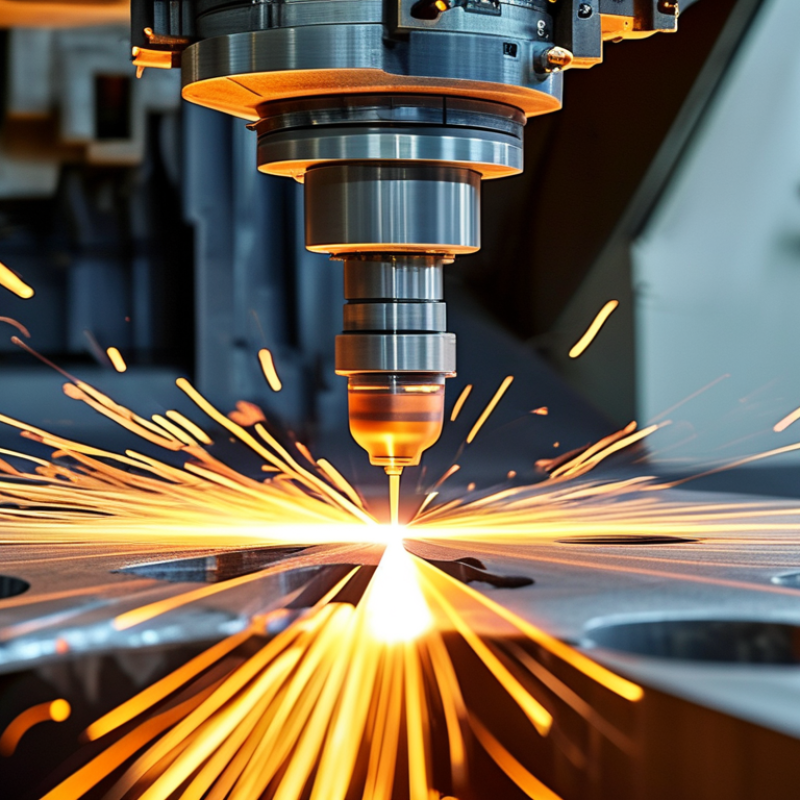
2026 Best Laser Cladding Machines for Global Buyers

What Are Laser Cladding Machines and How Do They Work?

2026 Best Laser Cladding Machines for Global Buyers

What Are Laser Cladding Machines and How Do They Work?

Laser cladding machines restore or strengthen metal surfaces by depositing a controlled layer of compatible material. A high-energy laser creates a small melt pool on the component. Powder or wire enters this pool, melts, and bonds with limited heat spread. The result is a dense coating with strong metallurgical adhesion. This differs from simple spraying, where bonding may rely more heavily on surface grip.

A typical system combines a laser source, deposition head, powder feeder, shielding gas, motion platform, and control software. The head follows a programmed path around a shaft, valve seat, mold, or turbine part. Argon or another approved gas protects the molten pool from oxidation. Operators adjust laser power, travel speed, feed rate, spot size, and overlap. Small changes matter. Excessive heat can distort thin sections, while insufficient energy may create weak bonding.

Reliable results begin before deposition. Technicians inspect the base metal, remove contamination, and measure the damaged area. They then select compatible powder, test a sample, and verify hardness, geometry, and surface finish. Non-destructive testing can reveal cracks or lack of fusion beneath an attractive surface. In real workshops, setup is rarely perfect. Dust, uneven feeding, or an inaccurate scan can alter the coating. That is why process records and careful inspection should guide every production run. Some repairs still need machining afterward. Laser cladding saves material, but it does not replace engineering judgment.

Which Laser Cladding Technologies and Materials Are Available?

Laser cladding machines now support several technologies for repairing and improving industrial components. Powder-based laser cladding offers accurate deposition and fine control over layer thickness. It suits turbine blades, hydraulic rods, molds, and complex edges. Wire-based systems reduce material waste and work well on larger surfaces. However, wire feeding needs careful alignment. A small deviation can create uneven tracks.

Common laser sources include fiber, diode, and solid-state systems. Each option affects heat input, deposition speed, and energy efficiency. Powder feeders may use coaxial or off-axis delivery. Coaxial systems support multi-directional movement around curved parts. Off-axis designs can be simpler for selected repair paths. Available materials include stainless steel, nickel alloys, cobalt alloys, tool steel, aluminum alloys, and iron-based powders. Carbide-reinforced blends can improve wear resistance, but they may increase cracking risks. Material compatibility matters more than impressive specifications.

Tips: Check the substrate chemistry, required hardness, and final machining allowance before choosing a machine. Test a small sample first. Measure dilution, porosity, bonding strength, and surface roughness. Keep records of laser power, travel speed, powder flow, and shielding gas. In practice, operators sometimes focus on deposition speed and overlook thermal distortion. That mistake can make a fast process expensive. A reliable supplier should provide process data, safety documentation, maintenance guidance, and application testing rather than promises alone.

2026 Best Laser Cladding Machines for Global Buyers - Which Laser Cladding Technologies and Materials Are Available?
Category Technology or Material Typical Feedstock Common Laser Power Range Typical Deposition Rate Typical Layer Thickness Main Advantages Typical Applications Key Buying Considerations
Technology Coaxial Powder Laser Cladding Metal powder delivered through a nozzle around the laser beam 1–6 kW for most repair and surface-engineering systems Approximately 0.2–3 kg/h, depending on powder size, power, and spot diameter Approximately 0.3–2.0 mm per deposited layer
  • Omnidirectional deposition
  • Suitable for complex geometries
  • Good control of heat input and dilution
  • Well suited to robotic and multi-axis systems
Precision repair of molds, dies, turbine components, shafts, valves, and sealing surfaces Check powder utilization, nozzle cooling, multi-axis reach, calibration system, and closed-loop height control
Technology Side-Feed Powder Laser Cladding Metal powder injected from the side of the laser melt pool 1–10 kW Approximately 0.3–5 kg/h Approximately 0.5–3.0 mm per layer
  • Simple and accessible powder-delivery layout
  • Suitable for large surfaces and rotational parts
  • Can support high deposition rates
Rolls, large shafts, wear-resistant bands, hydraulic rods, and general industrial refurbishment Evaluate travel-direction sensitivity, powder shielding, overspray control, and performance on curved surfaces
Technology Wire Laser Cladding Metal wire fed into the laser-generated melt pool 2–20 kW for small, medium, and large-area systems Approximately 1–12 kg/h; higher rates are possible in large-area deposition Approximately 0.5–4.0 mm per layer
  • High material utilization, often above powder-based processes
  • Lower airborne powder exposure
  • Good suitability for large components
  • Available with common welding-grade wires
Large molds, aerospace structures, heavy equipment parts, rolls, and dimensional restoration Check wire straightness, feeding stability, wire diameter compatibility, start-stop control, and heat management
Technology Preplaced Powder Laser Cladding Powder mixed with a binder or otherwise positioned on the substrate before laser processing 0.5–4 kW Generally lower than continuously fed powder or wire processes Approximately 0.2–1.5 mm per layer
  • Useful for localized coatings
  • Simple feed system
  • Can process difficult powder blends
Small repairs, laboratory development, selective wear zones, and thin protective coatings Consider preparation time, powder adhesion, binder removal, coating uniformity, and production repeatability
Technology High-Speed Laser Cladding Fine metal powder, normally injected ahead of or into a rapidly moving melt pool 1–6 kW Often approximately 0.5–4 kg/h for thin, wide-area coatings Approximately 0.1–0.8 mm per layer
  • High traverse speed
  • Low dilution compared with deeper cladding processes
  • Efficient for thin protective layers
  • Reduced post-machining allowance
Automotive components, hydraulic rods, bearing seats, shafts, and corrosion-resistant surfaces Verify powder size distribution, surface preparation, overlap control, and compatibility with cylindrical or flat workpieces
Technology Laser Metal Deposition with Multi-Axis Motion Powder or wire deposited by a CNC machine or industrial robot 1–10 kW, depending on part size and material Approximately 0.2–8 kg/h Approximately 0.3–3.0 mm per layer
  • Flexible access to three-dimensional surfaces
  • Suitable for repair and near-net-shape manufacturing
  • Can combine deposition, machining, and inspection
Complex dies, aerospace parts, impellers, molds, large tooling, and high-value component repair Assess robot or CNC repeatability, collision avoidance, build-volume limits, offline programming, and in-process monitoring
Material Nickel-Based Alloys Powder or wire Compatible with powder, wire, and multi-axis laser deposition systems Process-dependent; commonly selected for controlled, low-dilution deposition Approximately 0.2–2.5 mm per layer
  • Excellent corrosion and oxidation resistance
  • Good performance at elevated temperatures
  • Suitable for bonding to many steel substrates
Heat-resistant components, chemical-processing parts, turbine-related components, valves, and high-temperature tooling Confirm substrate compatibility, thermal expansion behavior, preheating needs, dilution limits, and post-cladding heat treatment
Material Cobalt-Based Alloys Powder or wire Compatible with powder-fed and wire-fed systems Process-dependent; generally used where wear and high-temperature performance are priorities Approximately 0.3–2.5 mm per layer
  • High resistance to abrasive and adhesive wear
  • Good hot-hardness retention
  • Useful in erosive and corrosive environments
Valve seats, hot-working tooling, pump components, cutting-tool surfaces, and wear-resistant overlays Check material availability, health and safety controls for powder handling, cracking tendency, and machining requirements
Material Iron-Based Alloys and Stainless Steels Powder or wire Compatible with nearly all industrial laser cladding platforms Approximately 0.5–10 kg/h, depending on the alloy and deposition method Approximately 0.3–4.0 mm per layer
  • Broad material availability
  • Cost-effective for general repair and hardfacing
  • Wide range of hardness and corrosion-resistance options
Shafts, gears, dies, rolls, hydraulic components, structural repairs, and corrosion-resistant overlays Match hardness and chemistry to the base metal; review preheating, interpass temperature, cracking risk, and final machining allowance
Material Tool Steels and High-Speed Steels Primarily powder; wire options are also available for selected grades Typically 1–6 kW for precision tooling applications Approximately 0.2–3 kg/h Approximately 0.2–2.0 mm per layer
  • High hardness and wear resistance
  • Suitable for localized die and mold restoration
  • Can extend tooling service life
Plastic-injection molds, forging dies, stamping tools, cutting tools, and forming equipment Evaluate preheating, tempering, residual stress, cracking control, heat treatment, and polishing quality
Material Nickel or Iron Matrix with Tungsten Carbide Composite powder containing tungsten carbide particles and a metallic binder Typically 1–6 kW, depending on carbide fraction and particle size Approximately 0.2–3 kg/h Approximately 0.3–2.0 mm per layer
  • Very high abrasive-wear resistance
  • Suitable for severe sliding and particle erosion
  • Can be applied selectively to high-wear zones
Mining tools, oil and gas components, pumps, agricultural wear parts, and conveying equipment Control laser energy to reduce carbide dissolution; check particle distribution, coating toughness, and finishing method
Material Aluminum Alloys Powder or wire designed for aluminum deposition Usually 1–6 kW with controlled shielding and heat extraction Approximately 0.5–8 kg/h, depending on feedstock and system configuration Approximately 0.5–4.0 mm per layer
  • Low-density repair and additive manufacturing option
  • Useful for lightweight structures
  • Wire deposition can provide high productivity
Lightweight structures, transportation components, molds, and dimensional restoration of aluminum parts Confirm oxide control, laser absorption, shielding quality, substrate compatibility, porosity control, and heat dissipation
Material Titanium Alloys Powder or wire under inert shielding Typically 1–10 kW depending on component size and deposition method Approximately 0.3–6 kg/h Approximately 0.5–3.0 mm per layer
  • High strength-to-weight ratio
  • Good corrosion resistance
  • Suitable for repair and near-net-shape deposition
Aerospace structures, medical components, marine parts, and high-performance engineering components Require strict oxygen and moisture control, suitable shielding, contamination prevention, and post-deposition stress relief
Machine Feature Closed-Loop Process Monitoring Optical, thermal, coaxial-camera, pyrometer, or melt-pool monitoring data Not applicable; selected according to the laser system Not applicable Supports layer-height and melt-pool consistency
  • Improves repeatability
  • Helps detect overheating, underfill, and feed interruption
  • Supports quality documentation
Serial production, aerospace repair, regulated industries, and unmanned production cells Ask whether sensors provide alarms only or automatically adjust laser power, travel speed, powder flow, and layer height
Machine Feature Integrated CNC or Robotic Automation Automated motion with powder or wire deposition Depends on the selected laser source and motion platform Depends on process configuration and part geometry Typically supports programmed multi-layer deposition
  • Repeatable tool paths
  • Improved access to complex surfaces
  • Reduced operator workload
Large components, complex tooling, production repair, and additive manufacturing Compare working envelope, axis travel, rotary positioning accuracy, programming software, safety enclosure, and service support
Buyer Checklist Recommended Selection Criteria for Global Buyers Powder, wire, or both, based on production requirements Select sufficient power for the required spot size, melt-pool depth, and deposition rate Size the machine for required output while maintaining acceptable dilution and coating quality Match layer thickness to machining allowance and geometric accuracy
  • Verify process trials using the actual substrate and cladding material
  • Request metallographic and hardness data
  • Review warranty, training, spare parts, and remote support
Repair, wear protection, corrosion protection, remanufacturing, and near-net-shape production Confirm electrical standards, laser safety certification, inert-gas requirements, local installation support, operator training, and consumable availability
Typical values are technology-level reference ranges. Actual performance depends on laser wavelength and power, nozzle design, feedstock size, substrate condition, shielding gas, toolpath, preheating, and machine configuration.

How to Compare the Best Laser Cladding Machines in 2026

Comparing the Best Laser Cladding Machines in 2026 requires more than reading laser power ratings. Buyers should examine cladding speed, powder efficiency, layer thickness, and heat control. A machine producing 3 kW may not outperform a lower-power system with better beam stability. Request test coupons made from your actual alloy and substrate. Inspect bead width, dilution, porosity, hardness, and surface finish under consistent settings.

Hands-on trials reveal details that brochures often miss. Watch how steadily the powder feeder responds during a long deposition cycle. Check whether the motion system maintains accuracy near corners and curved surfaces. Ask for software records, calibration procedures, and maintenance intervals. A clear parameter library can shorten training time, but operators still need metallurgical knowledge. Automation helps.

Total ownership cost deserves equal attention. Compare consumables, filters, cooling requirements, energy use, and technician response times. Confirm enclosure safety, interlocks, ventilation, and regional compliance before purchase. Documentation should explain emergency procedures in practical language. One weakness remains easy to overlook: a machine may perform well in a demonstration but struggle with dusty production conditions. Buyers should therefore test repeatability across several days, not just one successful sample. The “best” choice depends on measurable results, service reliability, and the operator’s real workload.

Which Specifications Matter for Global Buyers?

2026 Best Laser Cladding Machines for Global Buyers

Which Specifications Matter for Global Buyers?

Choosing a laser cladding machine starts with the application, not the advertised laser power. Buyers should match power output with coating material, layer thickness, and substrate sensitivity. A 2 kW system may suit precision repair, while heavier deposition can require more power. However, higher power does not automatically improve results.

Spot size matters greatly. A smaller spot supports narrow edges and detailed repairs. A larger spot can improve productivity on broad surfaces. Check the available range, adjustment method, and energy stability.

Powder feeding also deserves close attention. Reliable machines should provide steady flow, clear calibration procedures, and compatible feeder options for different powders.

Axis travel, positioning accuracy, and repeatability affect real production quality. Ask for measured data, not only brochure claims. A practical machine should include effective cooling, stable gas control, accessible maintenance points, and documented electrical and safety compliance. Global buyers should also examine voltage options, installation requirements, spare parts access, software language, operator training, and remote technical support.

I once focused too heavily on laser power. That was a mistake. Maintenance time and powder waste affected the final cost more than expected. A perfect specification sheet does not exist. Buyers should request sample trials using their actual materials and geometries. The trial should record deposition rate, hardness, dilution, surface finish, and post-processing needs. Those details reveal whether the machine fits real workshop conditions.

How to Select, Install, and Maintain the Right Machine?

Selecting a laser cladding machine starts with the repair, not the brochure. Define substrate, alloy, layer thickness, and acceptable dilution before comparing power ratings. Wohlers Report 2024 valued the global additive manufacturing industry at 20.035 billion dollars in 2023, growing 13.5 percent year over year. That expansion increases options, but it also makes vague specifications risky. Ask for bead geometry, deposition efficiency, thermal distortion data, and verified samples using your actual material. Request independent test records when possible.

Installation requires controlled details. Check floor loading, electrical capacity, cooling-water quality, ventilation, powder storage, and laser safety zones before delivery. ASTM F3187 provides guidance for metal directed energy deposition, while ISO 15614-7 supports procedure qualification for overlay welding. These references help structure acceptance tests, though they do not replace local engineering judgment. Leave service access around the machine. A crowded cell becomes difficult to clean and harder to inspect.

Maintenance should be measurable. Record nozzle condition, powder-feed stability, lens cleanliness, cooling temperature, and calibration results after each production shift. Inspect the first layer under magnification. Small waviness can become a serious defect after several passes. Keep critical spare parts on site, especially nozzles, protective windows, filters, and seals. Planned maintenance is usually cheaper than emergency repair, but the exact saving depends on workload and process maturity. A common mistake is trusting the machine’s alarm history alone. It misses gradual drift. Recheck the process with witness coupons at scheduled intervals, and revise the schedule when real production data disagrees.

2026 Best Laser Cladding Machines for Global Buyers

Typical laser power selection by application. Lower-power systems are commonly used for precision repair and thin coatings, while higher-power systems support larger surfaces and higher deposition rates. Actual requirements depend on material, coating thickness, part geometry, powder type, and process trials.

Selection guidance: prioritize beam control, powder-feed stability, motion accuracy, enclosure safety, installation support, and preventive-maintenance access—not laser power alone.

FAQS

What does a laser cladding machine do?

It restores or strengthens metal surfaces with a bonded material layer. A laser creates a small melt pool. Powder or wire melts inside it. The coating forms a dense metallurgical bond.

How does the laser cladding process work?

The machine moves a deposition head along a programmed path. Powder or wire enters the heated melt pool. Shielding gas protects the pool from oxidation. Power, speed, feed rate, and overlap require careful adjustment.

Which components are included in a typical system?

A typical system includes a laser source, deposition head, feeder, gas supply, motion platform, and control software. Cooling equipment and inspection tools are also important. Small details matter.

Is powder or wire better for laser cladding?

Powder supports accurate deposition and detailed repairs. It suits turbine parts, molds, hydraulic rods, and narrow edges. Wire can reduce waste on larger surfaces. However, wire alignment must remain precise.

Which materials can be used for laser cladding?

Common materials include stainless steel, nickel alloys, cobalt alloys, tool steel, aluminum alloys, and iron-based powders. Carbide mixtures can improve wear resistance. They may also increase cracking risks. Compatibility matters more than impressive specifications.

What machine specifications should buyers examine?

Check laser power, spot size, feeder stability, axis travel, accuracy, and repeatability. Also examine cooling, gas control, maintenance access, and electrical compliance. Higher power does not guarantee better results.

How can buyers test a machine before purchasing?

Request a sample trial using the actual material and component shape. Measure deposition rate, hardness, dilution, porosity, roughness, and bonding quality. Record machining requirements afterward. A rushed test can mislead.

What preparation is needed before deposition?

Technicians should clean the base metal and measure the damaged area. They should confirm material compatibility and test a small sample. Process records should include power, speed, powder flow, and shielding gas. Perfect setup is uncommon.

Conclusion

This guide to the 2026 best laser cladding machines for global buyers explains how these systems use a focused laser beam to melt a coating material onto a prepared surface, creating a strong metallurgical bond with limited heat impact. It introduces major technologies, including powder and wire deposition, and discusses material choices such as nickel alloys, cobalt alloys, stainless steels, carbides, and specialized wear-resistant blends. The German term Laserauftragschweißen is also used to describe this controlled surface-repair and enhancement process.

Readers will learn how to compare machines by evaluating laser power, deposition rate, working area, accuracy, automation, powder or wire delivery, monitoring functions, software, and energy efficiency. The guide also highlights practical specifications for international buyers, including electrical compatibility, safety systems, documentation, operator training, service support, installation requirements, and spare-parts availability. Finally, it outlines how to choose the right configuration, prepare the workspace, commission the equipment, and maintain key components for reliable, repeatable, and cost-effective operation.

Charlotte

Charlotte

Charlotte is a seasoned marketing professional with a deep understanding of the company's portfolio and a passion for elevating its presence in the market. With a keen eye for detail and a commitment to excellence, she ensures that our professional blog is regularly updated with insightful articles......